NachrichtenBearbeiten
https://odysee.com/@ovalmedia:d/mwgfd-impf-symposium:9
https://totalityofevidence.com/dr-david-martin/
| | Kaum beachtet von der Weltöffentlichkeit, bahnt sich der erste internationale Strafprozess gegen die Verantwortlichen und Strippenzieher der Corona‑P(l)andemie an. Denn beim Internationalem Strafgerichtshof (IStGH) in Den Haag wurde im Namen des britischen Volkes eine Klage wegen „Verbrechen gegen die Menschlichkeit“ gegen hochrangige und namhafte Eliten eingebracht. Corona-Impfung: Anklage vor Internationalem Strafgerichtshof wegen Verbrechen gegen die Menschlichkeit! – UPDATE |
Libera Nos A Malo (Deliver us from evil)
Transition NewsBearbeiten
Feed Titel: Homepage - Transition News Eskalation im Nahen Osten: Warum sich die Welt jetzt auf einen ewigen Krieg einstellen muss
 Sieben Nächte Bomben gegen Iran. Teheran schlägt zurück – in Kuwait, Bahrain, Syrien. Doch Trumps größter Gegner könnte er selbst sein. Eine Analyse. Unternehmen holen nach KI-bedingten Entlassungen Mitarbeiter zurück
Noch vor Kurzem galt Künstliche Intelligenz in vielen Unternehmen als Schlüssel, um Kosten zu senken und Arbeitsplätze zu automatisieren. (…)
Wieduwilts Woche: Warum Jens Spahn die Sache mit dem "Mietmutterbauch" doch überstehen könnte
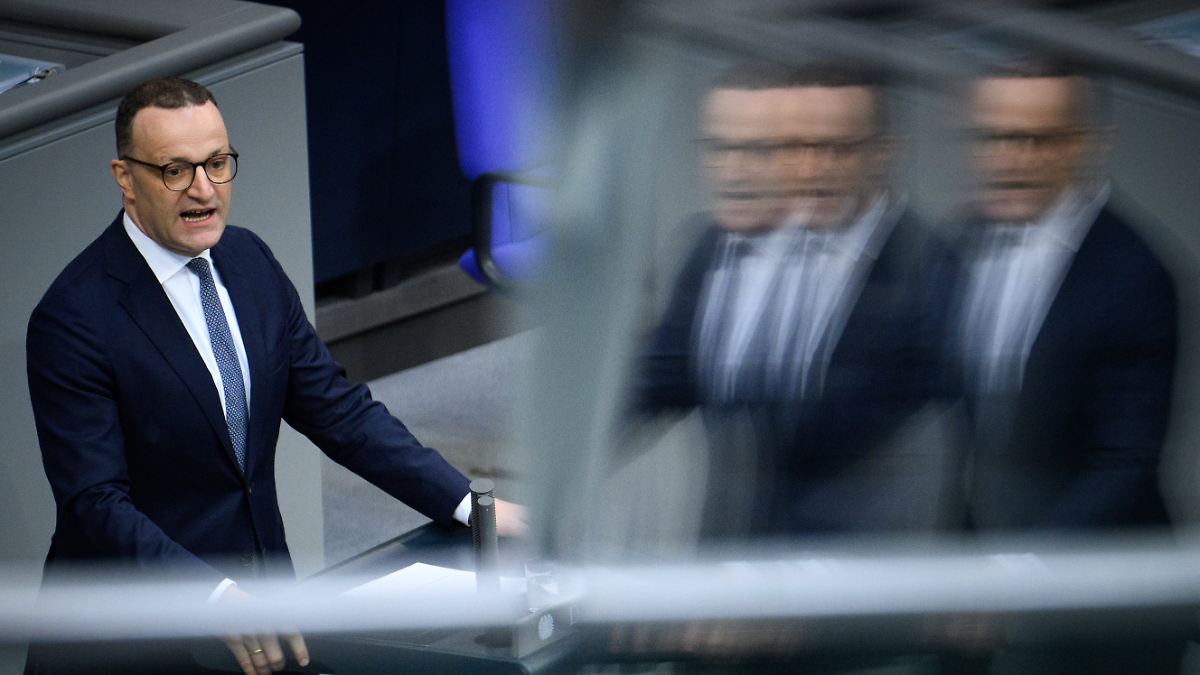 Das Sommerloch ist eine gefährliche Phase. Kleine Dinge, etwa Frischgeborene, bekommen große Auftritte - doch was sich der frischgebackene Papa Spahn geleistet hat, ist mehr als klein. Er hat das Vertrauen seiner Zielgruppe missbraucht. In eigener Sache: Peter Thiel erhält den Axel Springer Award 2026
 Unternehmer und Investor Peter Thiel ist der diesjährige Preisträger des Axel Springer Awards. Die Auszeichnung soll auch ein Zeichen für Meinungsfreiheit und offene Debatten sein. Psycho-Terror gegen Ex-ZDF-Frau, die auspackte
 Ex-ZDF-Moderatorin Katrin Seibold packte aus – und musste einen hohen Preis zahlen: Böse Artikel, Schmähung auf Wikipedia, Drohungen. Das Muster ist bekannt. Ich kenne es aus eigener Erfahrung. | Peter MayerBearbeiten
Feed Titel: tkp.at – Der Blog für Science & Politik Kernstücke der neuen WHO Verträge bringen Verlust der nationalen Souveränität der Mitgliedsstaaten
 Bekanntlich sollen bis Ende Mai Änderungen der Internationalen Gesundheitsvorschriften (IGV) beschlossen werden, die der WHO eine massive Ausweitung ihrer völkerrechtlich verbindlichen Vollmachten bringen sollen. […] Hardware-Schwachstelle in Apples M-Chips ermöglicht Verschlüsselung zu knacken
 Apple-Computer unterscheiden sich seit langem von Windows-PCs dadurch, dass sie schwieriger zu hacken sind. Das ist ein Grund, warum einige sicherheitsbewusste Computer- und Smartphone-Nutzer […] 25 Jahre weniger Lebenserwartung für "vollständig" Geimpfte
 Eine beunruhigende Studie hat ergeben, dass Menschen, die mit mRNA-Injektionen „vollständig“ gegen Covid geimpft wurden, mit einem Verlust von bis zu 25 Jahren ihrer […] Ostermärsche und Warnungen vor dem Frieden
 Ostern ist auch die Zeit der pazifistischen und antimilitaristischen Ostermärsche. Grund genug, um davor zu warnen. Tod nach Covid-Spritze: Ärzte im Visier der Justiz
 In Italien stehen fünf Ärzte nach dem Tod einer jungen Frau aufgrund der „Impfung“ vor einer Anklage. |
NZZBearbeiten
Feed Titel: Wissenschaft - News und Hintergründe zu Wissen & Forschung | NZZ
Warum eine Blase am Finger ein Fall für den Handchirurgen wurde
Konkurrenz für die Atomuhr: In zwei neuen Uhren geben Atomkerne den Takt vor
Die deutsche Impfkommission empfiehlt die Covid-Impfung jetzt erst ab 75 Jahren. Für wen ist das Virus noch gefährlich?
Das Dogma vom toten Planeten: wie ein Fehlschluss die Mars-Forschung für Jahrzehnte lähmte
PODCAST «NZZ QUANTENSPRUNG» - Präzisionsmedizin: mit Multiomik zur massgeschneiderten Gesundheit
VerfassungsblogBearbeiten
Feed Titel: Verfassungsblog
Erfurt Shines
Last weekend I was in Erfurt, the place where the authoritarian-populist AfD party held its annual federal convention. On Friday, I sat on a panel with my colleague Janos Richter at the conference “Before It Is Too Late: Scholarly Perspectives on the Fascist Danger”. And on Saturday I got up at the crack of dawn to help block the AfD delegates from reaching the assembly hall. I sat on Gothaer Platz, surrounded by police in black helmets, together with researchers of all disciplines and levels of seniority, as part of the refreshingly well-attended “science bloc”, and along with thousands of other protesters – to place my body in the path of this party hostile to the constitution.
Was I supposed to do that? As managing director of a legal-scholarly discourse platform on which this intellectual contest is supposed to be able to take place, should I not have remained neutral? Do I not thereby alienate the pole of the debate that simply sees things differently, that may well identify with one or another of such identitarian projects, and that will then no longer feel comfortable and welcome at Verfassungsblog? Do I not thereby damage the very thing I want to defend – the free contest of ideas among the free and equal, which has been regarded for seventy years as nothing less than constitutive of the Federal Republic’s constitutional order?
If one believes what could be read last week in all sorts of liberal centrist media, my behaviour was at any rate one thing: undemocratic. The AfD, the argument ran, has not been banned for the time being, and all democrats are therefore duty-bound to let it hold its party conference in peace, as if it were a party like any other. What unsettles me about this criticism is above all the breadth with which it is shared in a German public whose faith in the state appears unbroken. The addressee of the prohibition on discriminating between parties that have not been banned is the state – which in return holds the monopoly on initiating proceedings to ban a party hostile to the constitution. A monopoly it has so far, for whatever reasons, declined to use. That this should oblige civil society to regard and treat a party hostile to the constitution, such as the AfD, as a perfectly normal, legitimate participant in democratic competition seems to me, to put it cautiously, in need of justification.
++++++++++Advertisement++++++++++++
Help Secure Our Future with Your Donation
We make expert legal analysis freely accessible – when democracy needs it most. 4,000 authors. More than 10,000 articles. Nearly five million views last year.
Independent. Open Access. Reader-funded.
We need your help to keep it that way.
++++++++++++++++++++++++++++++++
The demand to forbid oneself from discriminating between non-banned parties loyal to the constitution and non-banned parties hostile to it is questionable not only insofar as it is addressed to democratic civil society, but also and especially insofar as it is addressed to scholarship. Anyone who cares about free scholarship must emphatically reject it. For one, because the freedom of scholarship itself sits squarely in the crosshairs already. There is more than enough evidence for that; anyone who doubts it can look up the chapter on science and scholarship in the AfD’s manifesto for Saxony-Anhalt, or briefly recall the infamous affair of the former Federal Minister of Research, Bettina Stark-Watzinger. For another, because scholarship, if it submits to this presumption, blinds itself. It then loses the very capacity to know a party hostile to the constitution for what it is. And if there is one thing that scholarship must not allow itself to be prevented from doing – for its own sake, as the epistemic enterprise it is – it is this: to know.
This demand’s inherent hostility to scholarship could also be felt in the unbelievable hate campaign – the most hideous death threats included – that scholars such as Ralf Michaels and Anne Graefe have had to endure in recent days, after they defended, in the run-up to the Erfurt protests, the legitimacy of civil disobedience against the AfD party conference. The aim of this campaign is clear: whoever takes a stand is to be made untenable as a scholar, ad personam, through the destruction of their academic reputation and, ultimately, their professional existence. Parts of the formerly respectable liberal-conservative press are not above rolling up their shirtsleeves and piling in with the greatest relish. (A salute, at this point, to Jürgen Kaube, co-publisher of the Frankfurter Allgemeine Zeitung and Niklas Luhmann’s erstwhile student, who has now enriched the discipline with the sociological term of art “unwashed subjectivity”. Hello, Herr Kaube! Love everything about your performative contribution to the field.) What this means for scholarship is equally clear: it must place itself between the attackers and those under attack. Whoever fails to do so, whoever slinks off into the bushes muttering “neutrality”, whoever, worse still, yields to the pressure and sanctions those under attack – to say nothing of those who, as supposed scholars, actively participate in the campaign – had better not come to me ever again with their academic freedom.
Ceterum censeo: it is not as if the ethnocultural fantasies of purity and purification, of norming and normalisation harboured by the authoritarian populists of the AfD were the only identitarian grand project that democrats and scholars have reason to oppose with their bodies these days. Today the Bundesrat – the federal chamber representing the governments of the Länder – adopted a legislative initiative, launched by Hesse’s CDU-led state government, that aims at an authoritarian carve-out from freedom of opinion in favour of a new mythical founding narrative for our country. The “denial of Israel’s right to exist” is to be made a criminal offence – not for the purpose of protecting any legal good, however pretextual, but quite unabashedly as a piece of special legislation discriminating on the basis of viewpoint. What this bill is about, and why I consider it a caesura of constitutional-historical magnitude, I have set out at length for the Berlin Review. The essay appeared last Tuesday and can be read here without a paywall. I wish you a stimulating read!
++++++++++Advertisement++++++++++++
Nach den Landtagswahlen könnte erstmals eine autoritär-populistische Partei in einem Bundesland (mit-)regieren.
Was kommt da auf uns zu?
Der Verfassungsblog bündelt dazu Expert:innenwissen, damit es parat steht, wenn es gebraucht wird.
Lesen Sie hier die Beiträge in unserem Spotlight.
++++++++++++++++++++++++++++++++
Back to Erfurt and to the hate campaign: That should have collapsed under its own weight at the latest after it had become clear that the Erfurt blockade had in fact remained what it had claimed to be from the outset: peaceful. Had the fantasies of violence in which some indulged beforehand actually come true, that might have provided for some pretext to pin the blame on some supposed academic instigators. But they did not.
That is probably owed above all to the astonishingly good and careful organisation of the protests. The organisers had not only defined a shrewdly crafted, peaceful action consensus under which literally everyone, black-clad anarchist or bespectacled granny, could gather. Above all, they seemed to have managed to win much of the city’s population over to their side. It was the city itself that took to the streets. People waved to us from balconies and windows as we set off towards the conference hall in the early morning. Small children. Old people. Everywhere, people had hung golden emergency blankets in their windows as a sign: Erfurt glänzt (Erfurt shines). There it was, the famous civil society. Mobilised. Ready for conflict. Ready to resist.
There is no place for civil society in the authoritarian grand projects of the AfD and the CDU. Whatever is not the state is family or business – private, either way. That is precisely why they need these identitarian myths: to allow something like collective identity to emerge at all in a depoliticised society. What could be felt in Erfurt is the opposite of that. What could be felt there was a society that identifies itself through collective action, through the shared experience of collective political efficacy. That is the society I want to live in.
*
Editor’s Pick
by JANOS RICHTER
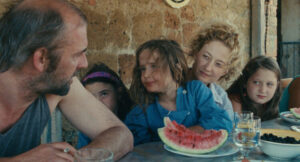
Copyright: BiM Distribuzione
“Prometti, per sempre sarà” – “Promise me, it will be forever” – sings Ambra Angiolini in the song “T’appartengo”, which the young protagonists of the film “The Wonders” (Alice Rohrwacher, 2014) sing and hum again and again, sometimes dancing along. The film follows twelve-year-old Gelsomina as the end of her childhood teaches her that nothing lasts forever – a realization that unsettles her at first, but which she gradually comes to see as holding its own kind of freedom. She grows up with her siblings in rural Italy, under the harsh hand of her taciturn, weathered father, who seems to have forgotten the liberating power of change. Gelsomina handles her newfound freedom so responsibly that we feel the injustice sharply when her father responds with rejection and hurt. Alice Rohrwacher stages these conflicts and Gelsomina’s growth so authentically and enchantingly that it’s hard not to feel sad realizing the film doesn’t last forever, but only 111 minutes.
*
The Week on Verfassungsblog
summarised by EVA MARIA BREDLER
France has historically been a country of vigorous civil society – from the storming of the Bastille to the stormy Gilets Jaunes, young and old alike take to the streets to defend their rights, preferably with fiery fervour. How much room will be left for that? Marine Le Pen leads the polls for the 2027 presidential election. And now she may run again: on 7 July, the Paris Court of Appeal upheld her conviction for misappropriating public funds but eased the loss of her civil rights just enough to make her eligible once more. CHARLOTTE SCHMITT-LEONARDY (GER) explains what has changed and maps possible scenarios.
In Erfurt, civil society is shining. But if we want to act politically as a collective, we need, first of all, information. That’s about to get harder. The German government wants to fundamentally overhaul the Freedom of Information Act – with a narrower circle of applicants, higher fees and new exemptions. CHIARA LANG, ROBIN LENZ, MAXIMILIAN PICHL and HANNAH VOS (GER) argue: this turns a right of everyone into a privilege for the few.
Private actors make access to information harder too – especially US tech companies, which hand us the dark wand entirely unregulated: deepfakes are flooding our feeds and are barely recognisable as such anymore. And they are not the only AI-generated content creating regulatory headaches. The EU’s new “Code of Practice on Transparency of AI-Generated Content” is an attempt to regulate such synthetic media. For PAUL FRIEDL (ENG), it offers sensible answers to several open questions – but it cannot escape a structural shortcoming: AI-content detection is not a “fixable” technical problem but a context-dependent, political one that demands iterative, multi-actor coordination.
AI is not only distorting our informational ecosystem but also chopping down old trees, quite literally: AI companies buy up used books, scan them, and discard them to feed their models. This roundabout method exists because it’s expected to fall under the fair use provision of U.S. copyright law. JANNIS LENNARTZ (ENG) locates the real problem elsewhere, though: not that Americans are buying unwanted books, but that books are increasingly unwanted in Europe.
Much more unwanted in the US are real human beings who happen to be born on US soil without the privilege of a certain piece of paper. In one of his many Executive Orders targeting immigrants, Trump denied American citizenship to children born on U.S. soil to immigrant parents who are undocumented or present on certain visas. Last Tuesday, the Supreme Court deemed this attempt unconstitutional in Trump v Barbara. ANJA BOSSOW (ENG) considers it a rare and important win but cautions that Barbara should not be remembered as an example of principled judicial resistance against gross executive overreach.
European institutions are testing another route for excluding migrants: amid ECtHR proceedings over pushbacks, the Chișinău Declaration frames migration as a security issue. CAMELIA-CLAUDIA MURESAN (ENG) rejects the instrumentalisation of the Court and explains why migrants invoking their human rights cannot be seen as a threat to democracy.
What is indeed a threat to European democracy are parties that violate the values of the European Union. For the first time, a breach of Article 2 TEU could get a European party struck from the register and cut off from EU funding. Whether this fate awaits the Europe of Sovereign Nations, which includes the AfD, will not only hinge on political majorities alone, but on the dogmatic elaboration of Article 2 TEU. The CJEU has developed standards for this over the past years, which could now become practically relevant for the first time. JOHANNA MITTROP (GER) sketches out possible scenarios.
Another real threat to democracy plays out online: TikTok is not just for trends – it’s also a space for political provocation and criticism. How far can that go under Article 10 ECHR when directed at public officials? GIONATA BOUCHÉ (ENG) criticises the ECtHR’s narrow answer in Miladze v Georgia.
++++++++++Advertisement++++++++++++
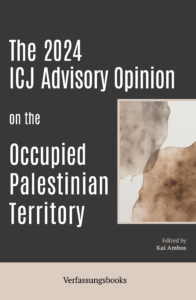
The 2024 ICJ Advisory Opinion on the Occupied Palestinian Territory
Edited by Kai Ambos
“This volume includes a wealth of expert analyses of this historic ICJ opinion. Readers will be struck equally by the range of perspectives, by the nuance and insightfulness of the contributors’ reflections, and by the speed with which this book has been put together. It is a timely and important contribution.”
– Tom Dannenbaum, Stanford Law School
Get your copy here – as always, Open Access!
++++++++++++++++++++++++++++++++
Offline, the space for political action is narrowing too: in the Palestine Action case, the defendants broke into an Israeli defence company in the UK, causing millions in damage. FREDERICK ATTENBOROUGH (ENG) explains how the judge, rather than a jury, declared their actions to be terrorist acts.
Israel is also at the centre of a different debate, playing out in Brussels: at the next European Council meeting on 13 July, the European Commission is expected to finally propose measures to restrict EU trade with illegal Israeli settlements. PEDRO R. BORGES DE CARVALHO (ENG) contextualises the discussed proposals.
Meanwhile, the German government coalition wants to ban the federal states from socialising private rental housing stock. Would that be compatible with the Basic Law’s allocation of competences? TIMO LAVEN (GER) shows that the plans are unconstitutional for several reasons at once.
And the Bundestag debated, say, private organ stocks: once again, the question was whether the current “opt-in” system for organ donation should be replaced by the more effective “opt-out” system. KARSTEN WITT (GER) analyses the dispute from an ethical perspective.
Also, our symposium “European Society After Commission v Hungary” (ENG) came to an end – after no fewer than 23 contributions! At this year’s Academy of EU at the EUI, the concept of European society was heavily debated. CHIARA RIMKUS reflects on these discussions and explains what they mean for the future direction of EU legal scholarship. MARLENE TIEDE shows how EU private international law knits diverse national legal orders into one legal community. HANS W. MICKLITZ examines the potential impact of the concept of European society on private law relations in Europe. Article 2 TEU contains the operative legal category of solidarity. Yet, as TERESA VIOLANTE critically explains, this concept has not entered the CJEU’s reasoning.
Well, solidarity is best when it’s not a legal category but a collective reality, anyway. And gold foil doesn’t just look good in Erfurt’s windows. It reflects back, brilliantly, whatever stands opposite it. And however dark that might be.
*
That’s it for this week. Take care and all the best!
Yours,
the Verfassungsblog Team
If you would like to receive the weekly editorial as an e-mail, you can subscribe here.
The post Erfurt Shines appeared first on Verfassungsblog.