NachrichtenBearbeiten
https://odysee.com/@ovalmedia:d/mwgfd-impf-symposium:9
https://totalityofevidence.com/dr-david-martin/
| | Kaum beachtet von der Weltöffentlichkeit, bahnt sich der erste internationale Strafprozess gegen die Verantwortlichen und Strippenzieher der Corona‑P(l)andemie an. Denn beim Internationalem Strafgerichtshof (IStGH) in Den Haag wurde im Namen des britischen Volkes eine Klage wegen „Verbrechen gegen die Menschlichkeit“ gegen hochrangige und namhafte Eliten eingebracht. Corona-Impfung: Anklage vor Internationalem Strafgerichtshof wegen Verbrechen gegen die Menschlichkeit! – UPDATE |
Libera Nos A Malo (Deliver us from evil)
Transition NewsBearbeiten
Feed Titel: Homepage - Transition News Zuwanderungsabgabe: Ein pragmatischer Hebel für die Schweiz
Die Debatte über das neue Vertragspaket zwischen der Schweiz und der EU dreht sich zunehmend um eine zentrale Frage: Wie lässt sich die (…)
Neutralitätsrat warnt vor einseitigem Kurs in der Schweizer Sicherheitspolitik
Der neu gegründete Neutralitätsrat ist am 20. August in Bern mit seinem zweiten Bericht an die Öffentlichkeit getreten. Unter dem Titel «Verpasste (…)
AfD schleift an den letzten SPD-Hochburgen
 Neue Umfragen aus Bremen und Hannover zeigen: Die SPD verliert in einstigen Hochburgen weiter an Rückhalt, während die AfD zulegt. Der bevorstehende Zusammenbruch des Eurodollar-Systems
 Bei einem Treffen mit führenden Vertretern aus den Bereichen Technologie, Kryptowährungen und Finanzen, das vorgestern im Weißen Haus stattfand, sprach Präsident Trump erneut den [...] „Unverantwortlich“ und „Heuchelei“: USA und Russland kritisieren Baerbock
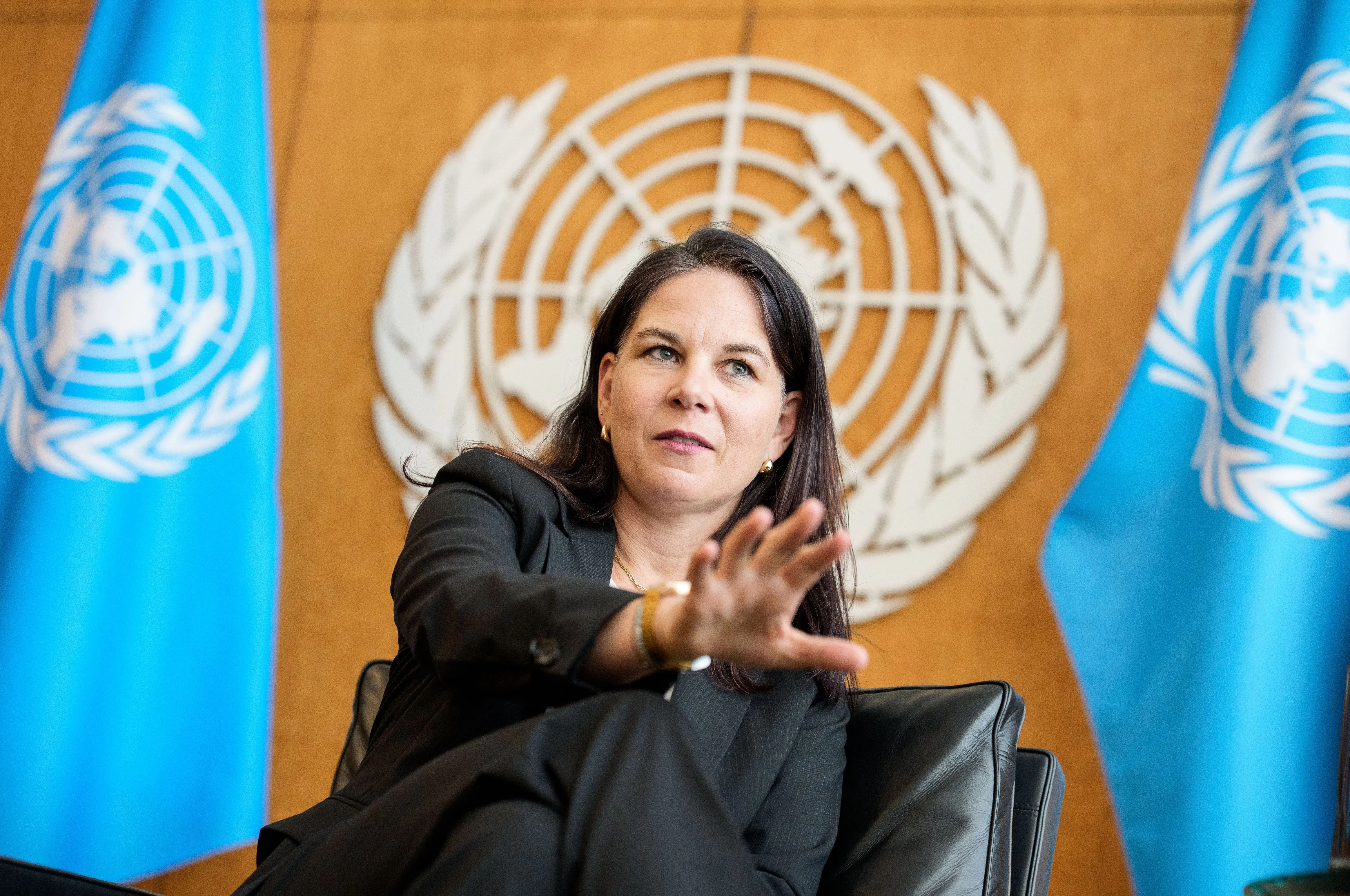 Es soll ein neuer UN-Generalsekretär bestimmt werden. Doch Russland und die USA kritisieren Baerbocks Rolle bei der Auswahl des Nachfolgers von António Guterres. | Peter MayerBearbeiten
Feed Titel: tkp.at – Der Blog für Science & Politik Kernstücke der neuen WHO Verträge bringen Verlust der nationalen Souveränität der Mitgliedsstaaten
 Bekanntlich sollen bis Ende Mai Änderungen der Internationalen Gesundheitsvorschriften (IGV) beschlossen werden, die der WHO eine massive Ausweitung ihrer völkerrechtlich verbindlichen Vollmachten bringen sollen. […] Hardware-Schwachstelle in Apples M-Chips ermöglicht Verschlüsselung zu knacken
 Apple-Computer unterscheiden sich seit langem von Windows-PCs dadurch, dass sie schwieriger zu hacken sind. Das ist ein Grund, warum einige sicherheitsbewusste Computer- und Smartphone-Nutzer […] 25 Jahre weniger Lebenserwartung für "vollständig" Geimpfte
 Eine beunruhigende Studie hat ergeben, dass Menschen, die mit mRNA-Injektionen „vollständig“ gegen Covid geimpft wurden, mit einem Verlust von bis zu 25 Jahren ihrer […] Ostermärsche und Warnungen vor dem Frieden
 Ostern ist auch die Zeit der pazifistischen und antimilitaristischen Ostermärsche. Grund genug, um davor zu warnen. Tod nach Covid-Spritze: Ärzte im Visier der Justiz
 In Italien stehen fünf Ärzte nach dem Tod einer jungen Frau aufgrund der „Impfung“ vor einer Anklage. |
NZZBearbeiten
Feed Titel: Wissenschaft - News und Hintergründe zu Wissen & Forschung | NZZ
INTERVIEW - «Es ist damit zu rechnen, dass China die USA in gewissen Wissenschaftsbereichen überholen wird», sagt der Schweizer Nobelpreisträger Kurt Wüthrich
Paare sprechen mehr als die fünf Sprachen der Liebe
Alternative zur Spritze: Ab September ist in Deutschland die erste Pille zum Abnehmen erhältlich und bald auch in der Schweiz
Legionellenausbruch in Basel: Die Epidemie, die nicht hätte sein müssen
Pluto ist seit zwanzig Jahren kein Planet mehr. Seiner Popularität hat das nicht geschadet
VerfassungsblogBearbeiten
Feed Titel: Verfassungsblog
Pro bono Lawyers to the Rescue
Civil society organizations (CSOs) in Europe are operating under pressing conditions, from dwindling funding to SLAPPs to the general erosion of civic space. This threatens their core function in sustaining democracy and protecting the human rights of vulnerable groups. Recent events in Ceuta serve as an example: the mass crossing of asylum seekers into the Spanish territory showed the fault lines of European solidarity as political leaders called for Spain’s suspension from the Schengen cooperation – despite the solidarity mechanisms introduced by the EU’s Pact on Migration and Asylum to respond to such events. This left many CSOs with the task of mitigating a looming humanitarian and political crisis as local reception centres and legal processing capabilities were overwhelmed.
The EU’s Civil Society Strategy introduces pro bono lawyers as partners who will help CSOs survive these and other challenges. However, the Strategy does not impose on them any of the accountability, transparency, or independence criteria that civil society are required to meet. Drawing on our research on pro bono practice around the globe, we argue that treating commercial firms as civil society’s guardians without specific accountability constraints is riskier than the Strategy’s “partnership” framing suggests. The pro bono support should at least be subject to further requirements ensuring transparency regarding its scope and distribution, disclosure of any potential or existing conflicts of interest between commercial clients and the respective CSOs, and, finally, continuity of support, such that the pledged representation continues even when doing so is no longer politically convenient or commercially beneficial.
Strategy for Civil Society and Pro Bono Lawyers
When the European Commission published its long-awaited Strategy for Civil Society as part of the European Democracy Shield in November 2025, most of the attention went to what its campaigners for years had asked for: a new Civil Society Platform, a knowledge hub on civic space, and a significant funding boost through the AgoraEU programme. Tucked inside this architecture, however, is another commitment. The Commission pledges (see 4.1) to connect communities of pro bono lawyers with civil society organisations across sectors, framing them as a resource and partners CSOs can draw on to navigate an increasingly hostile legal and administrative environment in Europe.
It is easy to see why. CSOs facing existential legal and political threats often cannot afford counsel, and pro bono practice among large commercial law firms has grown into a genuinely significant source of free legal capacity in Europe over the last two decades. The Strategy justifies the turn to the private legal profession’s public services with their possession of “necessary financial means, but also (…) specific skills and expertise” to navigate the current political environment. Framing these firms as partners for civil society sounds like an unambiguous good idea.
The Commission’s own text sets out ten guiding principles that are meant to govern its dialogue with civil society: partnership, transparency, representation, inclusivity, accountability, resourcing, safety among them. CSOs, in other words, are asked to accept a dense grid of expectations about legitimacy and accountability before they are recognised as valid interlocutors. However, on a closer inspection, the Strategy does not apply the same principles to pro bono lawyers. Many of them are employed by firms that simultaneously represent the states, corporations and oligarchs that civil society is often litigating against, are handed the role of saviour with none of that scrutiny attached. The Strategy does not ask who these firms are accountable to, how independent their commitment is from their paying client base, or what happens when that commitment becomes inconvenient. As even sympathetic reviewers of the Strategy have noted, the pro bono provisions are, at best, a promising but limited gesture rather than a thought-through policy.
A Pluralist European Society
This silence becomes more consequential when read alongside the CJEU’s landmark April 2026 judgment finding a breach of Article 2 TEU, which prompted the question in a recent Verfassungsblog symposium: what is European society, and who gets to define it? If European society is constituted by whoever is recognised as a legitimate co-interpreter of its values, e.g., the Court through judgments, the Commission through policy, civil society through mobilisation and advocacy, then a Strategy that installs big law pro bono as one of civil society’s structural partners is not a neutral administrative solution. It is an act of boundary-drawing about who belongs inside the circle that gets to sustain European civic life.
In the debate, Piep’s post on “red (funding) lines” reaches this boundary-drawing problem from the opposite direction. Piep reads the Court’s insistence that European society is constituted by pluralism as placing a limit on the Commission’s own funding practice: if pluralism is what the concept protects, then a funding regime that has historically rewarded transnational, integration-friendly organisations over more regional or critical ones sits uneasily with the value the Court just anchored in EU law.
Our argument is the mirror image of that risk. Where Piep worries the Strategy’s funding architecture may exclude too much, the pro bono provisions show the same Strategy including too easily when admitting commercial law firms into civil society support without any of the values-screening or accountability the Commission applies to civil society. Read together, the two arguments suggest the Strategy is not operating with one coherent boundary for European civil society at all, but with two inconsistent ones: a tightly monitored gate for whom it funds, and unbarred access for whom it recruits to protect. A Strategy built on pluralism should make the Commission just as wary of the second failure as the first.
What the Partnership Framing Leaves Out
Three findings from our own research on Big Law pro bono practice suggest why that reflexivity matters. First, the Strategy does not consider the power imbalance the dependency on such support would establish between the benefactors and their beneficiaries. Without regulations to govern pro bono commitments, CSOs must count on the goodwill – and self-interest – of private actors for the provision of critical services. Pro bono, though “for the common good,” is rarely offered for purely altruistic reasons. This should spark concern over potential selectivity in beneficiaries, as commercial law firms may favour large NGOs with non-politically controversial issue areas that do not compromise their brand safety or their contracts with commercial clients. Vice versa, CSOs engaged in more confrontational activities or sensitive issues may be passed over or find themselves having to sanitize their advocacy strategies to receive pro bono support. In short, pro bono-partnerships may not sufficiently cover the structural funding gaps that CSOs face, working best as an addition to state support rather than a solution to its scarcity.
Second, such partnerships do not necessarily satisfy the legal needs of all CSOs and the individuals they serve. The intended pro bono partners, which the Strategy invokes by highlighting the services of global pro bono clearinghouse PILnet, are commercial lawyers in big international firms: Big Law. By drawing on the skills and experience of their core business, not to mention the resources from commercial clients, they are well-suited to support large, commercialized NGOs in navigating the complex legislative landscape across Europe. But this expertise does not necessarily match the skills needed by grassroots CSOs operating at the local level, and their activities may also rely on specialized knowledge of environmental law, asylum law, and other human rights-related legal fields that the average commercial lawyer has little experience with.
Third, and ultimately, it is important to remember that the primary aim of commercial law firms is to provide legal services to commercial clients. It is unlikely that they would accept pro bono cases that would put them at odds with paying clients or jeopardize their core business. This much was evident when several major US law firms scaled back their pro bono engagement in response to President Donald Trump sanctioning them through executive orders. The firms’ capitulation left their usual beneficiaries – asylum seekers, transgender individuals, and other members of vulnerable groups and the CSOs that support them – scrambling to cover the gaps in funding and legal aid. We highlight this example because it calls into question the reliability of commercial pro bono commitment in the face of political pressure.
A Saviour Without Safeguard
None of this is an argument against pro bono support for European civil society: our research suggests it can be genuinely valuable when well-executed. And a framework for such partnership already exists. PILnet, as mentioned in the Strategy, has connected hundreds of CSOs with pro bono partners, providing the infrastructure to support European civil society the way the Commission envisions. Indeed, the work to identify protection gaps left by the EU’s new asylum regime and offer pro bono support throughout the asylum procedure has already begun. This capacity can and should be used to prevent crises like the one happening in Ceuta from being repeated.
Our argument is that “partnership” with pro bono lawyers is not self-executing, and that the Commission’s Strategy has adopted the word without defining its conditions. At minimum, an accountable version of this policy would require: transparency regarding the volume and distribution of pro bono support, so gaps and dependencies are visible; disclosure of conflicts between a firm’s commercial client base and the CSOs it represents pro bono; and some continuity mechanism ensuring that support pledged to organizations providing critical support to vulnerable groups or facing legal attack through SLAPPs cannot be quietly withdrawn the moment it becomes politically inconvenient.
The post Pro bono Lawyers to the Rescue appeared first on Verfassungsblog.
Lawsuits about state actions and policies in response to the coronavirus (COVID-19) pandemic