Kaum beachtet von der Weltöffentlichkeit, bahnt sich der erste internationale Strafprozess gegen die Verantwortlichen und Strippenzieher der Corona‑P(l)andemie an. Denn beim Internationalem Strafgerichtshof (IStGH) in Den Haag wurde im Namen des britischen Volkes eine Klage wegen „Verbrechen gegen die Menschlichkeit“ gegen hochrangige und namhafte Eliten eingebracht. Corona-Impfung: Anklage vor Internationalem Strafgerichtshof wegen Verbrechen gegen die Menschlichkeit! – UPDATE
Seit vielen Jahren prägt Jens Spahn die deutsche Politik als einer der schillerndsten, aber auch umstrittensten CDU-Politiker. Ob junger Politaufsteiger, Bundesgesundheitsminister oder Fraktionsvorsitzender der Union im Bundestag – er schien unantastbar. Skandale wie die Maskenaffäre, ein fragwürdiger Immobilienkauf oder umstrittene Netzwerke prallten an ihm ab.
Am Samstag hat Spahn nun den Fraktionsvorsitz abgegeben. Auslöser war, dass er und sein Lebensgefährte Daniel Funke mithilfe einer Leihmutter in den USA Eltern geworden sind. Leihmutterschaft ist in Deutschland verboten. Die CDU hatte diese Haltung erst im Februar 2026 auf ihrem Parteitag erneut klar bekräftigt.
Viele Medien berichten jetzt über seinen «Rücktritt» als Fraktionsvorsitzender.T-Online etwa leitete einen Kommentar mit den Worten ein: «Jens Spahn zieht die Reißleine.» Und in der Dachzeile dazu heißt es: «Rücktritt von Jens Spahn.»
Doch dieser Begriff täuscht. Seinen Posten als Fraktionsvorsitzender hat er zwar abgelegt, doch es handelt sich nicht um einen Rücktritt im Sinne eines vollständigen politischen Abgangs. Vielmehr erleidet der 46-Jährige lediglich einen begrenzten Machtverlust, bei dem er alle wesentlichen Privilegien behält. Eine echte Konsequenz für jahrelanges Handeln mit Doppelmoral bleibt aus.
Diese hätte aber erfolgen müssen. Und zwar allein schon deswegen, weil sich Spahn in der Vergangenheit klar gegen Leihmutterschaft ausgesprochen oder zumindest der entsprechenden Linie seiner Partei öffentlich nicht widersprochen hat – sowohl persönlich als auch in seiner Funktion als Bundesgesundheitsminister. Mehr Verlogenheit geht kaum:
Als er Gesundheitsminister war (2018 bis 2021), ließ sein Ministerium auf eine Anfrage der FDP antworten, dass eine Legalisierung (auch altruistischer Modelle) nicht geplant sei. Die Begründung bezog sich auf das Kindeswohl.
2015 schrieb er in einem Gastbeitrag für das Magazin GQ:
«Als schwuler Mann und Christ kann ich mich persönlich nur sehr schwer mit der Idee eines gemieteten Mutterbauchs anfreunden.»
Die CDU bekräftigte im Februar 2026 auf ihrem Bundesparteitag das Verbot von Leihmutterschaft (auch altruistischer Formen). Spahn war zu diesem Zeitpunkt bereits Fraktionsvorsitzender – und es gibt keine Berichte darüber, dass Spahn dem Beschluss widersprochen oder sich enthalten hätte. Zugleich hatten Spahn und sein Mann Funke zu diesem Zeitpunkt bereits einen Vertrag mit einer Leihmutter in den USA geschlossen.
Von einem harten Schnitt für Spahn kann keine Rede sein
Der 46-Jährige bleibt vollwertiger Bundestagsabgeordneter. Sein Mandat ist persönlich und unabhängig vom Fraktionsposten. Er kann weiterhin an allen Sitzungen teilnehmen, in Ausschüssen mitarbeiten und vor allem über Gesetze abstimmen. Er behält seine reguläre Abgeordnetendiät sowie sämtliche erworbenen Pensionsansprüche aus seiner Zeit im Parlament seit 2002. Der Verlust beschränkt sich weitgehend auf die herausgehobene Führungsrolle und die damit verbundene zusätzliche Vergütung. Von einem harten Schnitt oder gar Karriereende kann keine Rede sein.
Die öffentliche Darstellung versucht im Grunde, den Vorgang als selbstbestimmte, reife Entscheidung zu verkaufen. Die Realität sieht aber anders aus. Nach Berichten mehrerer Medien haben Bundeskanzler Friedrich Merz und CSU-Chef Markus Söder Spahn in einem Telefonat deutlich zum sofortigen Rückzug aufgefordert. Merz nannte den Schritt später «richtig und unvermeidlich». Es war demnach kein souveräner Abgang aus innerer Überzeugung, sondern ein erzwungener Rauswurf, den Spahn mit einer persönlichen Erklärung zu veredeln versuchte.
Wurde Spahn Merz zu gefährlich?
Boris Reitschuster argumentiert gar, die Leihmutterschaft sei nicht der wahre Grund: Spahn gehe nicht, weil er im Februar über das Schicksal anderer abgestimmt habe, während «seine» Leihmutter schon schwanger war. Er gehe, weil er Merz zu gefährlich geworden sei.
Dazu passt, was die Bild heute berichtet, nämlich dass «viele Abgeordnete den Rücktritt als Glücksfall für Merz sehen». Nach ihrer Einschätzung könne der CDU-Chef die sogenannte Spahn-Krise nutzen, um eine größere Rochade auf wichtigen Posten vorzunehmen. Dafür müsse er personelle Veränderungen nicht mit einer schwachen Leistung der bisherigen Amtsinhaber begründen. Mit Blick auf die Wahlen in den Ostländern setzen Parteivertreter zudem auf einen Neustart-Effekt.
Strategischer Rückzug wie bei Christian Lindner?
Die Berliner Zeitung wiederum sieht Parallelen zu Christian Lindner. Der FDP-Politiker hatte 2011 als Generalsekretär mitten in der schweren Krise der Rösler-FDP «die Reißleine» gezogen. Mit wenigen Worten und ohne die Partei zusätzlich zu beschädigen, trat er zurück.
Und als die Liberalen 2013 an der Fünfprozent-Hürde zerschellten, lag Lindner nicht in den Trümmern. Er war einer der wenigen, die unbeschadet dastanden und später erfolgreich neu durchstarten konnten. Spahn könnte ein ähnliches Manöver im Sinn haben: Rechtzeitig den Absprung schaffen, sich als Familienmensch inszenieren und die eigene Karriere langfristig schützen – ohne auf Mandat, Diät oder Pension zu verzichten. Die Berliner Zeitung fasst es wie folgt zusammen:
«Spahn geht bevor die Koalition implodiert: Gut für seine Familie und die Karriere.»
Für diese These spricht auch, dass Spahn und Funke die Geburt ihres Sohnes durch eine Leihmutter in den USA selbst (!) bekannt gegeben hatten (und zwar über den Instagram-Account von Funke). Damit mussten sie mit einer Eskalation rechnen. Ganz anders der Virologe, CDU-Politiker und Drogenbeauftragte der Bundesregierung Hendrik Streeck, der zusammen mit seinem Ehemann Paul Zubeil im April bestätigte, Eltern eines Sohnes geworden zu sein.
«Wir sind von Herzen überglücklich über die Geburt unseres Sohnes. Plötzlich ist da noch einmal ein ganz neuer Sinn in unserem Leben», sagte Streeck damals dem Magazin Bunte.
Das Kind wurde den Berichten zufolge im US-Bundesstaat Idaho geboren. Doch anders als Spahn und Funke machte Streeck keine Angaben dazu, wie das Kind zur Welt gekommen war. Mehrere Medien mutmaßten zwar, der Junge sei von einer Leihmutter ausgetragen worden. Eine Bestätigung Streecks oder seines Mannes gibt es dafür bislang nicht, was sicherlich einer Eskalation entgegenwirkte.
All dies passt auch in ein Muster, das bei Spahn seit Jahren zu beobachten ist, und das den Eindruck entstehen lässt, dem im Münsterland Geborenen gehe es allein um Machtmaximierung. Die NachDenkSeiten etwa bezeichnen Spahns regelmäßige Teilnahme an den geheimen Treffen des US-Tech-Milliardärs Peter Thiel («Dialog Society») als einen «Skandal». Solche exklusiven, nicht-öffentlichen Zirkel von Milliardären, Militärs und Politikern ohne Transparenz würden demokratische Grundsätze untergraben. Das Portal schreibt:
«Thiel steht für eine staatsfeindliche und gleichzeitig totalitäre Denkrichtung, die offiziellen CDU-Phrasen vom ‹Schutz der Demokratie› eigentlich total entgegensteht. Und auch dem (von der CDU zumindest öffentlich proklamierten) Schutz eines ‹freien Marktes›, denn Thiel findet nicht nur Demokratie hinderlich, sondern auch Monopole empfehlenswert.
Konnte das Umfeld von Thiel den deutschen Politiker in dieser Richtung politisch beeinflussen? Schließlich bezeichnete sich das ‹Dialog›-Netzwerk laut Phoenix in einer Einladung aus dem Jahr 2012 selbst als exklusiven Kreis von rund 150 globalen Führungskräften, die ‹dabei helfen können›, die vom Netzwerk entwickelten Pläne umzusetzen.»
Wenn Bundestagsabgeordnete von Linke oder AfD für Posten in Ausschüssen im Gespräch seien, hebe sofort ein Chor von Bedenkenträgern an, um vor ‹Geheimnisverrat›, Einflussnahme und Spionage zu warnen. «Wie ist das bei Spahn?», fragen die NachDenkSeiten. Bei seiner Teilnahme an den Treffen 2018 und 2019 sei er sogar Bundesminister gewesen – und was habe er der illustren Runde aus ausländischen Akteuren wohl an bundespolitischen Interna ausgeplaudert?
«Und was sagt es über Spahn aus, dass er überhaupt zu den ‹Auserwählten› gehört, bei denen das Thiel-Umfeld anscheinend davon ausgeht, dass sie bereit seien, ‹dabei helfen zu können›, die ‹vom Netzwerk entwickelten Pläne umzusetzen›?»
Oder denken wir an Spahns Rolle als Gesundheitsminister während der «Corona-Zeit». Noch Ende vergangenen Jahres verteidigte er in der Corona-Enquete-Kommission des Bundestages sein Krisenmanagement – ohne jedes Unrechtsbewusstsein (wir berichteten).
Spahns «Alleingang als ‹Team Ich›» bei der Maskenbeschaffung
Wir können auch einen Blick auf den Skandal mit der Maskenbeschaffung werfen. So wurden unter der Ägide von Spahn 5,8 Milliarden Masken für 5,9 Milliarden Euro gekauft, das 20- bis 22-Fache des Empfohlenen. Davon mussten 3,4 Milliarden Stück vernichtet werden – bei zusätzlichen Lagerkosten von circa 510 Millionen Euro und weiteren drohenden Kosten. Verträge waren handwerklich schlecht, voller juristischer Mängel, teils zu Höchstpreisen abgeschlossen, und das Ministerium handelte eigenmächtig – gegen Fachratschläge, ohne Bundestagsbeschluss und unter Umgehung der Beschaffungsämter.
Der Bundesrechnungshof und die Sonderermittlerin Margaretha Sudhof warfen dem damaligen Gesundheitsministerium massive Überbeschaffung vor. Sudhof kritisierte zudem «fehlendes ökonomisches Verständnis und politischen Ehrgeiz», was zu einem «Alleingang als ‹Team Ich›» geführt habe. Insgesamt sollen mehr als 43 Milliarden Euro für Masken, Tests, Betten und Ausgleichszahlungen ausgegeben worden sein, wie die Grünen-Politikerin Paula Piechotta Spahn bei der Befragung in der Enquete-Kommission entgegenwarf, was Chaos und einen laxen Umgang mit Steuergeldern belege.
Lieferanten klagten erfolgreich (zum Beispiel 86 Millionen Euro plus Zinsen durch OLG Köln), weitere Milliardenklagen drohen. Besonders scharf attackierte Piechotta Spahn: Das Ministerium habe «wahllos Geld ausgegeben», Verträge seien mangelhaft, es habe Chaos geherrscht und Spahn habe «kein Gespür mehr für die Summen». Sie nennt ihn einen «Ego-Shooter», der krisenwichtige Beschaffungen nie an sich hätte ziehen dürfen, wirft Vetternwirtschaft und Missmanagement vor, fragt direkt nach persönlicher Bereicherung und fordert einen vollwertigen Untersuchungsausschuss (statt der begrenzten Enquete-Kommission), da nur dort Akten erzwungen und Wahrheit endlich erzwungen werden könnten – «damit jemand wie Jens Spahn Konsequenzen ziehen muss, wenn er Mist gebaut hat».
Später versuchte der gelernte Bankkaufmann, sich mit seinem im September 2022 erschienenen Buch «Wir werden einander viel verzeihen müssen» als selbstkritisch und sensibel darzustellen. Doch vor dem Hintergrund dessen, was über Spahn bekannt ist, scheint es ihm besonders an Sensibilität für die Belange jenseits seiner eigenen Person zu mangeln.
Kein gutes Licht auf Spahn wirft auch der Kauf eines Hauses in Berlin-Dahlem im Jahr 2020 für rund 4,125 Millionen Euro. Nach Recherchen von Tagesspiegel und Zeit wurde der Kauf zunächst weitgehend, möglicherweise sogar vollständig, über Kredite der Sparkasse Westmünsterland finanziert – also über ein Finanzinstitut, bei dem Spahn bis 2015 Mitglied des Verwaltungsrats war.
Mehrere Finanzexperten hielten es für bemerkenswert, dass ein Kredit in dieser Größenordnung offenbar mit sehr wenig oder gar keinem Eigenkapital möglich gewesen sein soll. Das ist zwar nicht unmöglich – insbesondere bei kreditwürdigen Kunden mit werthaltigen Sicherheiten –, aber es fiel auf.
Doch damit nicht genug. Ursprünglich hieß es aus Spahns Umfeld, eine Finanzierungslücke habe durch eine Erbschaft von Funke geschlossen werden sollen beziehungsweise, dass bei einer österreichischen Bank eine entsprechende Erbschaft verwaltet werde. Doch diese Darstellung passte offenbar nicht zu den tatsächlichen Verhältnissen. Anschließend wurde erklärt, es habe sich nicht um eine Erbschaft gehandelt, sondern um Wertpapiervermögen, das Funke aufgebaut habe. Der Vorwurf lautet also, dass sich die öffentliche Erklärung mehrfach änderte und dadurch Fragen offenblieben.
«Politisch unklug» und – sic – «unsensibel» sei der Zeitpunkt für den Kauf des Hauses, das später wegen des vergleichsweise hohen Werts der Immobilie als «Villa» in die Schlagzeilen gekommen war, gewesen, so Spahn in seinem besagten Buch. Gelernt hat er daraus offenbar bis zuletzt nicht. Denn: Sich ein Baby über Leihmutterschaft zu «besorgen», zuvor aber öffentlich zu verkünden, man könne sich als schwuler Mann und Christ «nur schwer mit der Idee eines gemieteten Mutterbauchs anfreunden», und dann auch noch einen entsprechenden Parteitagsbeschluss mitzutragen, kann mindestens als «unsensibel» bezeichnet werden.
Spahn ist damit als jemand entlarvt, der exemplarisch für eine Politik steht, die Regeln predigt, sie selbst aber ignoriert, Kritik abperlen lässt und bei dem Glaubwürdigkeit nur eine untergeordnete Rolle spielt.
Wir erinnern uns: Im Frühjahr hatte der deutsche Kulturstaatsminister Wolfram Weimer beim Buchhandlungspreis drei Preisträger von der Liste gestrichen, die von der Jury ausgewählt worden waren. Aufgrund von «verfassungsschutzrelevanten Erkenntnissen», lautete die lapidare Begründung.
Der Aufschrei in den Leitmedien war groß, unter anderem deswegen, weil die Betroffenen das Etikett «linksextrem» bekamen. Der Angriff galt also den eigenen Leuten, die ja durchaus als «links» bezeichnet werden durften, aber bitteschön doch nicht als «extrem».
Kein Hahn hätte gekräht, wenn das Etikett «rechtsextrem» gewählt worden wäre. Und dieses bekommen heute bekanntlich alle, die Regierung, Mainstream-Presse und woke Ideologie kritisieren. Dissidenten also! Nun gibt es nicht wenige Buchhandlungen und Verlage, die sich nicht scheuen, Bücher mit unangepasstem Inhalt zu veröffentlichen beziehungsweise zu verkaufen. Doch die findet man in den Listen der Preisträger vergebens.
Man kann sich auch leicht ausmalen, warum. Denn auch die Jurys bewerten die Kandidaten durch ihre ideologische, ja, mainstreamige Brille. Preisverleihungen sind Politik mit anderen Mitteln. Das kommt in der jüngsten Regeländerung besonders deutlich zum Vorschein: Beim Deutschen Verlagspreis trifft künftig der Kulturstaatsminister höchstpersönlich die Auswahl – «auf Grundlage der Empfehlung der Jury» freilich!
Interview mit Juryvorsitzendem Jörg Thadeusz
Ein bisschen Scheindemokratie muss schließlich noch gewahrt bleiben. Apropos Demokratie. Von der redet besonders gerne Der Spiegel. Das Relotius-Blatt sieht sie nach der Regeländerung natürlich in Gefahr, schließlich seien «unabhängige Jurys» bisher unverzichtbar gewesen für die «demokratische Förderpraxis», wie im Interview mit dem neuen Verlagspreis-Juryvorsitzenden Jörg Thadeusz betont wird.
So, so! Waren alternative, unangepasste Verlage wie massel, etica.media oder Loco – um nur drei Vertreter herauszugreifen – bislang ausgezeichnet worden? Hätten sie sich überhaupt bewerben dürfen? Würde die vermeintlich «unabhängige Jury» sie berücksichtigen, sie überhaupt wahrnehmen?
Der Spiegel tut es jedenfalls nicht, selbst die Berliner Zeitung nicht und auch nicht die neue Ostdeutsche Allgemeine, obwohl beide sich aufgemacht haben, es besser zu machen als die regierungs- und ideologietreuen Leitmedien. Wenn dort mal Bücher besprochen oder Autoren interviewt werden, dann handelt es sich überwiegend um solche, die auch sonst auf dem Radar sind. Wer sich darunter bewegt, wird auch von diesen Blättern strikt ignoriert.
Schon die Berichterstattung über das weite Feld des Buchwesens ist höchst undemokratisch und bildet den Pluralismus nicht in dem Maße ab, wie über ihn bloß gesprochen wird. Es mutet geradezu heuchlerisch an, wenn Leitmedien wie Der Spiegel von politischer Einflussnahme schwadronieren. Sie selbst tun es nämlich auch, nur mit den Waffen, die ihnen der eigene Berufsstand zur Verfügung stellt.
(Selbst-)Entlarvung des Kulturbetriebs
Was sich seit Jahren abspielt, ist ein Kulturkampf. Von dem wollen die Leitmedien jedoch nicht reden. Thadeusz wirkt da schon mutiger, wenn er im Spiegel-Interview darauf verweist, um Kulturstaatsminister Weimer zu verteidigen: «Ich glaube ihm aber, und das hat er ja öffentlich gesagt, dass er sich vor allem im Kulturkampf gegen die ganz Rechten sieht.»
Damit gibt Thadeusz praktisch zu, worum es bei staatlichen Förderpreisen und Regeländerungen geht. Etiketten wie «rechts» oder «linksextrem» dienen lediglich als Rechtfertigungsmittel, die man selbst fabriziert.
Später im Interview wird er noch deutlicher: «Zugleich finde ich auch, dass der Kulturbereich wahnsinnig verlogen ist», sagt Thadeusz und erläutert es am Beispiel der Theaterregisseure, die sich als «wahnsinnig unabhängig» geben, aber letztlich auch ein «bestimmtes Weltbild» produzieren.
«Das alles wird nicht wirklich erzählt, aber wenn Wolfram Weimer sagt, ich mag keine linksradikalen Buchhandlungen, ist die Aufregung groß.» Die Entlarvung ist köstlich, genauso wie die eigene im Anschlusssatz: «Also: Wenn jemand der Meinung ist, er müsse Verschwörungstheorien in die Welt blasen, soll er das machen. Aber er muss doch nicht mit Steuergeld unterstützt werden.»
Preise als Machtinstrument
Hier schließt sich der Kreis. Wenn ein Juryvorsitzender Aussagen als «Verschwörungstheorien» abkanzelt, tut er das auch anhand bestimmter Kriterien und auf der Grundlage eines bestimmten Weltbilds, das er reproduziert, indem er alles degradiert, was dem nicht entspricht.
Damit gleicht sich Thadeusz dem gerügten Theaterregisseur an und erweist sich als genauso wenig unabhängig wie er. Förderpreise, ob nun für Verleger oder Buchhandlungen, sind Machtinstrumente, umhüllt mit Glitzer, der Wohlwollen suggeriert.
Jeweils 50.000 Euro bekommen die ersten drei prämierten Verlage. Bis zu 79 weitere dürfen auf Preise von 18.000 Euro hoffen. Doch damit nicht genug: Es gibt noch den Nachhaltigkeitspreis und den Innovationspreis, die jeweils mit 24.000 Euro dotiert sind. Viel Geld, das letztendlich die Steuerzahler erwirtschaften. Investiert wird es jedoch nicht in Vielfalt, sondern in die Stabilisierung der herrschenden Meinung.
Die Schweizer Neutralität erscheint heute oft als unverrückbare Konstante der Außenpolitik. Historisch betrachtet war sie jedoch stets Gegenstand politischer Auseinandersetzungen und äußeren Drucks. Die großen Herausforderungen der napoleonischen Zeit oder die Spannungen während des Zweiten Weltkriegs sind bekannt. Weniger beachtet wird, dass auch die Nachkriegsjahre eine Phase intensiver Diskussionen über Sinn, Zweck und Grenzen der Neutralität waren. Diese Diskussion kann bei der kommenden Abstimmung über die Neutralitätsinitiative als Orientierungspunkt dienen (hier und hier).
Nach 1945 musste sich die Schweiz in einer grundlegend veränderten Weltordnung positionieren. Europa war politisch geteilt, die Vereinigten Staaten und die Sowjetunion standen sich als globale Machtblöcke gegenüber. Die Schweiz lag geografisch im Einflussbereich des westlichen Bündnisses, wollte aber ihre außenpolitische Eigenständigkeit bewahren.
Die Diplomatischen Dokumente der Schweiz für die Jahre 1949 bis 1952 zeigen ein differenziertes Bild dieser Phase. Die Schweiz bemühte sich damals, ihre Neutralität international zu festigen. Gleichzeitig war die Frage offen, wie dieses Prinzip in einer Welt des Kalten Krieges praktisch umgesetzt und verständlich kommuniziert werden sollte.
Ein zentrales Problem bestand darin, dass der Begriff Neutralität unterschiedlich verstanden wurde. Alfred Zehnder vom Eidgenössischen Politischen Departement (heute Eidgenössisches Departement für auswärtige Angelegenheiten, das Außenministerium) stellte 1951 fest, dass innerhalb und außerhalb der Schweiz keine vollständige Klarheit darüber bestehe, was Neutralität konkret bedeutet.
Der Begriff sei teilweise zu einer emotionalen Vorstellung geworden. Gegenüber dem Ausland müsse deshalb erklärt werden, dass zwischen der Neutralität des Staates und einer politischen oder ideologischen Neutralität unterschieden werden müsse.
Die offizielle Linie lautete: Die Schweiz sei neutral und die Bedeutung dieser Neutralität zeige sich durch ihr konkretes Verhalten im jeweiligen Einzelfall. Eine umfassende und starre Definition sollte vermieden werden, weil sie die Handlungsmöglichkeiten des Landes einschränken könnte.
Diese pragmatische Auslegung wurde zu einem wesentlichen Element der Schweizer Neutralitätspolitik: nicht politische Gleichgültigkeit, sondern die Fähigkeit, unabhängig und berechenbar zu handeln.
Besonders interessant ist die Rolle von Bundesrat Max Petitpierre (FDP/Neuenburg), der von 1945 bis 1961 dem Politischen Departement vorstand. Untersuchungen auf Basis der diplomatischen Dokumente zeigen, dass auch Petitpierre nicht von Anfang an vorbehaltlos vom Nutzen der Neutralität überzeugt war.
In den frühen Nachkriegsjahren stellte sich für ihn die Frage, ob ein neutraler Staat in einer Welt, in der sich Demokratien und kommunistische Systeme gegenüberstanden, seine Position langfristig behaupten könne. Die Erfahrungen des Zweiten Weltkriegs und der Umgang mit totalitären Regimen hatten die traditionelle Neutralitätsidee zusätzlich belastet.
Später setzte Petitpierre jedoch umso stärker auf eine klare politische Formel: Die Neutralität sollte nicht als passive Haltung verstanden werden, sondern als Instrument, um der Schweiz Sicherheit, Unabhängigkeit und internationale Handlungsfähigkeit zu ermöglichen. Petitpierre stellte das unter das einprägsame Motto: Neutralität und Solidarität.
Der Ost-West-Konflikt stellte diese Politik vor konkrete Herausforderungen. Ein Beispiel war der Handel mit den kommunistischen Staaten. Die USA versuchten nach 1948, strategisch wichtige Güterlieferungen in den Ostblock einzuschränken. Für die Schweiz entstand ein schwieriger Balanceakt zwischen ihrem wichtigsten Handelspartner im Westen und ihren eigenen wirtschaftlichen Interessen. Bern zeigte Bereitschaft, bestimmte Exportbeschränkungen mitzutragen, hielt aber gleichzeitig an wirtschaftlichen Beziehungen fest, soweit diese mit der Neutralität vereinbar erschienen (Hotz-Linder-Agreement).
Auch politisch musste die Schweiz immer wieder ihre Position erklären. Während Washington eine deutlichere Unterstützung westlicher Positionen erwartete, lehnte Bern beispielsweise eine politische Stellungnahme zugunsten der amerikanischen Haltung im Koreakrieg ab. Gleichzeitig beteiligte sich die Schweiz an internationalen Aufgaben, etwa bei der Überwachung eines möglichen Waffenstillstands durch Schweizer Offiziere. Damit wollte der Bundesrat zeigen, dass Neutralität nicht Rückzug bedeutete, sondern eine aktive Rolle in der internationalen Gemeinschaft ermöglichen konnte.
Die Nachkriegsjahre zeigen auch, dass Neutralität nie losgelöst von wirtschaftlichen und politischen Interessen betrachtet werden kann. Die Schweiz verfolgte eine eigenständige Außenpolitik, musste dabei aber stets die internationalen Machtverhältnisse berücksichtigen.
Die frühe Anerkennung der Volksrepublik China wurde beispielsweise auch mit wirtschaftlichen Überlegungen begründet. Gleichzeitig blieb Bern vorsichtig gegenüber politischen Integrationsprojekten in Europa, da eine zu enge Bindung die Neutralität gefährden könnte. Diese Kombination aus Prinzipientreue und Pragmatismus prägte die Schweizer Außenpolitik über Jahrzehnte.
Auch heute steht die Neutralität wieder im Mittelpunkt politischer Diskussionen. Der internationale Kontext hat sich verändert, doch die Grundfrage bleibt ähnlich: Wie kann ein kleiner Staat seine Eigenständigkeit bewahren, wenn er von einem dominierenden Machtblock umgeben ist?
Die aktuellen Auseinandersetzungen sind daher kein Ausnahmezustand, sondern Teil einer langen historischen Entwicklung. Die Schweizer Neutralität war nie ein fertiges Konzept, sondern musste sich immer wieder an neue Realitäten anpassen.
Umstritten ist die Neutralität immer wieder. Die Erfahrung der vergangenen Jahrzehnte zeigt, dass gerade die Fähigkeit zur Diskussion und zur Neubewertung ein Teil ihrer Stärke sein kann. Es bleibt zu hoffen, dass auch die gegenwärtige Debatte und Volksabstimmung nicht zu einer Schwächung, sondern zu einer erneuten Klärung und Stärkung des Neutralitätsverständnisses führt. Immerhin ist die Schweiz der NATO, der EU und der USA zum Beispiel mit der Übernahme der Ukraine-Sanktionen viel mehr entgegengekommen, als sie es in der Nachkriegszeit je tat.
Politik wird längst nicht mehr nur mit Gesetzen gemacht. Sie wird mit Bildern gemacht. Mit Emotionen. Mit Geschichten. Und manchmal mit Familienfotos – wie im Fall Jens Spahn, der sich gemeinsam mit seinem Mann Daniel Funke in den USA ein Leihmutter-Baby gekauft hat. Die Empörung schlug so hohe Wellen, dass Spahn von seinem Posten als Fraktionschef der deutschen Regierungspartei CDU/CSU zurückgetreten ist (wir berichteten hier und hier).
Die aktuelle Debatte um Jens Spahn dreht sich vordergründig um die Frage der Leihmutterschaft. Doch auf einer zweiten Ebene geht es um etwas anderes: um die Verschiebung dessen, was gesellschaftlich als selbstverständlich gelten soll. Wer glaubt, die mediale Inszenierung der frisch gegründeten Familie sei bloß eine private Angelegenheit, unterschätzt die Macht öffentlicher Symbolik.
Das sogenannte Overton-Fenster beschreibt genau diesen Prozess. Was gestern noch als ethisch hochproblematisch oder gar verwerflich galt, wird zunächst diskutiert, dann emotional aufgeladen und schließlich als normal präsentiert. Nicht über Nacht, sondern Schritt für Schritt.
Ein ähnliches Muster war bereits bei der Debatte um den Busfahrer zu beobachten, der vor seinem Bus in Richtung Mekka betete. Auch dort ging es auf einer Metaebene um mehr als den Einzelfall. Solche Vorfälle dienen häufig als gesellschaftliche Testballons: Wie weit lässt sich eine Grenze verschieben? Wie groß ist der Widerstand? Wann schlägt Empörung in Gewöhnung um?
Erst wird ein Tabubruch kontrovers diskutiert, dann als Ausnahme relativiert und schließlich als Ausdruck einer neuen Normalität präsentiert. Ob es um religiöse Sonderansprüche im öffentlichen Raum oder um die ethische Bewertung der Leihmutterschaft geht – das Muster der schrittweisen Gewöhnung erscheint erstaunlich ähnlich. Nicht der Einzelfall steht im Mittelpunkt, sondern die Frage, ob er dazu beiträgt, das gesellschaftlich Akzeptierte Stück für Stück neu zu definieren.
Deshalb ist die eigentliche Geschichte nicht allein, dass ein führender CDU-Politiker einen Weg gewählt hat, den seine Partei politisch ablehnt. Dieser Widerspruch ist offensichtlich und wird bereits breit diskutiert. Viel interessanter ist die Frage, warum ausgerechnet jetzt intime Familienbilder öffentlich verbreitet werden. Wem nützt diese Inszenierung? Welches gesellschaftliche Signal soll sie senden?
Die Botschaft lautet unausgesprochen: Seht her, wir sind eine ganz normale Familie. Ein glückliches Baby. Liebevolle Eltern. Was sollte daran falsch sein?
Gerade so funktioniert gesellschaftliche Normalisierung. Die ethische Debatte wird in den Hintergrund gedrängt, weil niemand als herzlos erscheinen möchte. Wer Einwände erhebt, sieht sich schnell gezwungen, zunächst zu betonen, dass sich seine Kritik selbstverständlich nicht gegen das Kind oder gegen homosexuelle Eltern richtet. Die eigentliche Frage – ob Leihmutterschaft Frauen und Kinder zu Objekten eines Marktes macht – verschwindet hinter einer emotionalen Erzählung.
Die beschönigende Vokabel «Leihmutterschaft» verdeckt dabei aus Sicht ihrer Kritiker, worum es tatsächlich geht: Ein Kind wird im Rahmen eines vertraglich geregelten und finanziell abgewickelten Prozesses für Dritte ausgetragen und nach der Geburt an die Wunscheltern übergeben. Deshalb sprechen viele nicht von Leihmutterschaft, sondern von Babykauf.
Traditionelle Feministinnen wie die Autorin des entsprechenden Artikels in der deutschen Zeitschrift Emma schlagen in diese Kerbe, oder etwas «süferli» wie man in der Schweiz sagt, die katholische Plattformkath.ch. Ob man diesen Begriff teilt oder nicht – genau darüber müsste die Gesellschaft offen diskutieren, statt die ethische Kernfrage hinter Hochglanzbildern eines vermeintlich unpolitischen Familienglücks verschwinden zu lassen.
Bemerkenswert ist dabei vor allem die politische Glaubwürdigkeit. Jens Spahn hat sich in der Vergangenheit selbst kritisch zur Leihmutterschaft geäußert; innerhalb der Union wird das Verbot weiterhin verteidigt. Gleichzeitig entschied er sich persönlich für einen Weg, der in Deutschland nicht möglich gewesen wäre und deshalb im Ausland beschritten wurde. Diese Diskrepanz hat selbst aus den eigenen Reihen erhebliche Kritik ausgelöst und zum Rücktritt des Politikers geführt.
Es ist nicht das erste Mal, dass der Eindruck entsteht, für manche politische Eliten gälten andere Maßstäbe als für den Rest der Gesellschaft. Ob während der Corona-Zeit, bei der umstrittenen Maskenbeschaffung oder nun bei einer ethisch hoch umstrittenen Form der Familiengründung – Kritiker sehen ein Muster: Regeln gelten nur, solange sie andere binden und zuvorderst jeweils Jens Spahn. Wer über Recht und Moral spricht, sollte sich selbst an denselben Maßstäben messen lassen.
Man muss diese Analyse nicht teilen. Aber man sollte zumindest erkennen, dass gesellschaftliche Veränderungen selten mit Gesetzesänderungen beginnen. Sie beginnen mit Geschichten, Bildern und Gewöhnung. Erst wenn etwas emotional als normal empfunden wird, wächst später die Bereitschaft, auch die rechtlichen Grenzen zu verschieben.
Genau deshalb ist die Debatte größer als Jens Spahn. Es geht nicht nur um einen Politiker oder seine private Entscheidung. Es geht um die Frage, wie ethische Grenzen verschoben werden: nicht zuerst durch Gesetzesänderungen, sondern durch Bilder, Gewöhnung und Sprache. Wer den Babykauf sprachlich zur «Familiengründung» umdeutet, verändert den moralischen Maßstab – lange bevor der Gesetzgeber überhaupt zur Abstimmung gerufen wird.
Die Wall Street fürchtete ihn mehr als viele Präsidenten. Ein Anruf von ihm konnte Fusionen auslösen, Märkte beruhigen und das Schicksal ganzer Industrien bestimmen. Als die Vereinigten Staaten 1907 am Rand einer Finanzkrise standen, wartete das Land nicht auf Washington – es wartete auf einen privaten Banker: John Pierpont Morgan.
Jahrzehntelang galt Morgan als der mächtigste Mann der amerikanischen Wirtschaft. Er entschied mit, welche Unternehmen überlebten, welche untergingen und welche zu neuen Giganten aufstiegen. Sein Einfluss reichte weit über seine eigene Bank hinaus. Er war einer jener Männer, die nicht nur am Finanzsystem teilnahmen – sie prägten dessen Regeln.
Doch als Morgan im Frühjahr 1913 in Rom starb, offenbarte sein Testament eine überraschende Tatsache: Der Mann, den viele für den unangefochtenen Herrscher des amerikanischen Kapitalismus hielten, war persönlich gar nicht der reichste seiner Zeit.
Sein Vermögen wurde auf rund 80 Millionen Dollar geschätzt – nach heutiger Kaufkraft mehrere Milliarden. Eine gigantische Summe. Doch verglichen mit anderen Titanen des Industriezeitalters war Morgan kein Spitzenverdiener.
John D. Rockefeller besaß ein weit größeres Vermögen. Auch Andrew Carnegie übertraf ihn deutlich. Andere Industrielle hatten mehr Fabriken, mehr Land, mehr Aktien und mehr persönliches Eigentum. Morgan musste nicht der reichste Mann sein. Er musste nur bestimmen können, wohin das Geld floss.
Während die großen Industriellen Fabriken, Stahlwerke und Ölkonzerne aufbauten, kontrollierte Morgan etwas Grundlegenderes: die Finanzierung. Er kaufte nicht unbedingt selbst die größten Unternehmen. Er entschied, welche Unternehmen Zugang zu Kapital erhielten, welche fusionierten und welche neu organisiert wurden. Seine Stärke lag nicht im Besitz allein, sondern in der Fähigkeit, andere wirtschaftlich abhängig zu machen.
Morgan verstand früh ein Prinzip, das die moderne Finanzwelt bis heute prägt: Wer den Zugang zu Geld kontrolliert, besitzt oft mehr Einfluss als jener, der lediglich viel Geld besitzt.
Die größte Demonstration seiner Macht erfolgte während der Finanzkrise von 1907. Banken gerieten ins Wanken, Anleger verloren das Vertrauen, die Börse stürzte ab. Die Vereinigten Staaten verfügten damals noch über keine Zentralbank (Federal Reserve) und keinen modernen Mechanismus zur Stabilisierung des Finanzsystems.
Morgan griff ein. Er versammelte die führenden Banker New Yorks und verdonnerte sie zu einer gemeinsamen Rettungsaktion. Private Milliarden wurden mobilisiert, Banken gestützt und der Zusammenbruch verhindert.
Für viele Beobachter war dies ein beunruhigender Moment: Ein einzelner Privatmann hatte eine Aufgabe übernommen, die eigentlich dem Staat hätte zufallen sollen.
Die Krise von 1907 wurde später zu einem wichtigen Argument für die Gründung der amerikanischen Zentralbank Federal Reserve im Jahr 1913. Die politische Schlussfolgerung war klar: Eine moderne Volkswirtschaft darf nicht davon abhängig sein, dass ein einzelner Finanzmagnat im richtigen Moment die richtigen Entscheidungen trifft.
Morgans eigentliches Vermächtnis bestand deshalb nicht in den Millionen seines Nachlasses. Es bestand in einem Modell von Einfluss. Er zeigte, dass Macht im Kapitalismus nicht nur durch Besitz entsteht. Sie entsteht durch Netzwerke, Informationen und Kontrolle über entscheidende Schnittstellen.
Mehr als hundert Jahre später ist dieses Prinzip aktueller denn je. Die größten Finanzakteure der Welt werden nicht allein daran gemessen, wie viel Vermögen sie besitzen, sondern daran, welchen Einfluss sie auf Unternehmen, Staaten und Märkte ausüben.
Der historische Nachfolger von Morgans Bankhaus, JPMorgan Chase, gehört heute zu den mächtigsten Finanzinstituten der Welt. Unter Führung von Jamie Dimon wurde der Konzern zu einem Symbol für die Konzentration wirtschaftlicher Macht in wenigen Händen.
Die Frage, die schon zu Morgans Zeiten gestellt wurde, bleibt deshalb aktuell: Wer besitzt tatsächlich die Macht – jene, die über das meiste Geld verfügen, oder jene, die entscheiden können, wohin das Geld fließt?
J. P. Morgans Testament lieferte eine unbequeme Antwort: Der größte Reichtum muss nicht auf einem Konto stehen. Manchmal liegt er in der Fähigkeit, die gesamte Wirtschaft in Bewegung zu setzen.
J. P. Morgan war einst der Mann, den Amerika in der Krise anrief. Mehr als ein Jahrhundert später steht sein Name weiterhin für die Frage, wie viel Macht private Finanzakteure tatsächlich besitzen.
Der historische Nachfolger seines Bankhauses, JPMorgan Chase, gehört heute zu den mächtigsten Finanzinstituten der Welt. Unter Führung von Jamie Dimon wurde der Konzern zu einem Symbol für die Konzentration wirtschaftlicher Macht in wenigen Händen. Doch die Geschichte des Instituts zeigt auch die Schattenseiten dieser Macht: Im Zusammenhang mit Jeffrey Epstein geriet JPMorgan wegen seiner langjährigen Geschäftsbeziehung zu dem später verurteilten Sexualstraftäter unter erheblichen öffentlichen Druck und in rechtliche Auseinandersetzungen.
Dabei ging es weniger um einzelne Personen als um eine grundsätzliche Frage: Wie funktionieren Kontrollmechanismen in globalen Finanznetzwerken, wenn Kunden über Jahrzehnte Zugang zu einflussreichen Institutionen behalten? Die Verfahren rund um Epstein machten sichtbar, dass große Finanzhäuser nicht nur über Kapital verfügen, sondern auch über ein weitreichendes Netzwerk aus Kunden, Entscheidungsträgern und gesellschaftlichen Eliten.
Die Verbindung zwischen Epstein und JPMorgan ist deshalb ein modernes Beispiel für ein altes Problem, das bereits in Morgans Zeit existierte: Macht entsteht nicht nur durch Geldbesitz, sondern durch Beziehungen, Informationen und Zugang zu zentralen Schaltstellen.
Die entscheidende Frage bleibt dieselbe wie vor über hundert Jahren: Wer kontrolliert tatsächlich die Systeme, von denen Gesellschaften abhängig sind – jene, die das meiste Vermögen besitzen, oder jene, die über die Wege des Kapitals entscheiden?
J. P. Morgans Vermächtnis war die Erkenntnis, dass Einfluss oft unsichtbarer ist als Reichtum. Die Debatten um moderne Finanzgiganten und ihre Verbindungen zu mächtigen Netzwerken zeigen, dass diese Frage bis heute nicht beantwortet ist.
:
Kann Feed nicht laden oder parsen cURL error 22: The requested URL returned error: 404
Rubikon
:
Kann Feed nicht laden oder parsen cURL error 22: The requested URL returned error: 404
Peter Mayer
Bitte gib einen Feed mit dem Parameter url an. (z.B. {{feed url="https://example.com/feed.xml"}}
Doctors4CovidEthics
Bitte gib einen Feed mit dem Parameter url an. (z.B. {{feed url="https://example.com/feed.xml"}}
Die Weltgesundheitsorganisation (WHO) hat den Gesundheitsnotstand ausgerufen. Es werden weitere infizierte Personen erwartet. Hier sind die wichtigsten Antworten zum Ebola-Virus zu finden.
Das Startup Reflect Orbital will Tausende von Satelliten ins All bringen und damit Sonnenlicht auf die Schattenseite der Erde lenken. Dann könnten Solarpanels rund um die Uhr Strom erzeugen. Das bedroht ein ganzes Forschungsgebiet.
Umweltschädliche Kühlmittel, hoher Strombedarf und zusätzliche Hitze in den Strassen: Die kühle Luft hat einen Preis. Doch die Wahl des richtigen Geräts kann einen grossen Unterschied machen.
Ein halbes Jahrhundert fand man kein Mittel gegen RAS, eines der wichtigsten Krebsgene. Nun ist es gelungen. In den USA wird das neue Medikament Daraxonrasib bereits eingesetzt, ähnliche Wirkstoffe sind in der Pipeline. Doch europäische Patienten müssen noch warten.
Ein Nest bauen, Kraftnahrung sammeln, Eier legen und ständige Kämpfe um Leben und Tod: 90 Prozent der Hornissenköniginnen sterben an Erschöpfung. Die Kolumne «Wild und wundersam».
Cane
:
Kann Feed nicht laden oder parsen cURL error 22: The requested URL returned error: 404
On 8 July 2026, the European Parliament adopted a Resolution on the Impact of the 1974 Turkish Invasion on Cypriot Women and Girls and the Crimes Committed by Turkish Forces and Consequences on Gender Equality. The Resolution acknowledges that Cypriot women’s experiences of violence during 1974 are “often being excluded from official historical, legal and institutional recognition” and thus calls to document testimonies and provide support for survivors. This is particularly significant from the perspective of the expressive dimension of justice. Justice requires creating the conditions in which those whose voices have long been silenced can tell their stories, contribute to the historical record, and participate in shaping the collective memory of conflict if they wish to do so. The Resolution therefore provides an important opening for such recognition, but its transformative potential will ultimately depend on whether its commitments to documenting testimony and promoting historical awareness translate into meaningful opportunities for survivors to speak and be heard openly and safely and to have their experiences incorporated into Cyprus’s public memory of the conflict.
The Historical Context of Cyprus
The history of Cyprus has been marked by recurring intercommunal violence and profound human suffering. The intercommunal clashes, which reached their most violent peak between 1963 and 1964 as well as 1967, were marked by killings committed by and against members of both the Greek Cypriot and Turkish Cypriot communities. On 15 July 1974, the military junta then governing Greece carried out a bloody coup d’état to remove President Archbishop Makarios III from power. Five days later, on 20 July 1974, Turkish armed forces invaded the island, marking the beginning of a military intervention that resulted in widespread loss of life, mass displacement, enforced disappearances and the occupation of approximately 37% of the island, which continues to this day. On 14 August 1974, Turkey launched the second phase of the invasion.
Among the many violations committed during the conflict was the sexual violence perpetrated against women and girls. Yet, despite the profound physical and psychological consequences of these crimes, the experiences of survivors remained largely absent from public discourse for decades. Their silence was rarely the product of formal legal prohibition. Rather, it reflected the enduring effects of trauma,stigma, patriarchal social norms, fear of disbelief and social exclusion, together with the absence of institutional spaces in which survivors could safely recount their experiences. Consequently, one of the gravest yet least acknowledged consequences of the Cyprus conflict occupied only a marginal place in political and public discourse.
Gradual Change
The position of survivors of conflict-related sexual violence has gradually begun to change. Over the past three decades, international criminal law and international human rights law have fundamentally transformed the legal understanding of conflict-related sexual violence, recognising it as one of the gravest violations committed during armed conflict. From the landmark jurisprudence of the International Criminal Tribunals for the former Yugoslavia and Rwanda to the adoption of the 2000 United Nations Security Council Resolution 1325 on Women, Peace and Security, international law has increasingly recognised that justice for survivors requires more than criminal accountability. It also demands acknowledgement, documentation, reparative measures and the preservation of survivors’ testimonies as part of the historical record.
The European Parliament’s Resolution on Cyprus was adopted by 575 votes in favour and 33 against, with 43 abstentions. The initiative emerged through the European Parliament’s Committee on Women’s Rights and Gender Equality, FEMM. The Resolution calls for, inter alia, greater recognition, justice, accountability and support for victims, while addressing the long-term consequences of displacement and conflict-related violence.
Specific to the argument in this piece, the Resolution:
“Calls on the Commission to support Cyprus in continuing efforts to determine the full scale of conflict-related crimes, including sexual violence, and establish the number of victims, to collect data and safely document testimonies, thus ensuring adequate official recognition, redress and reparation for survivors and, where appropriate, their descendants, to promote historical awareness and to provide support services for survivors through an enhanced national action plan.”
The Resolution consistently refers to Cypriot women and girls and addresses the sexual crimes committed by the Turkish military forces and paramilitary extremist perpetrators during the Turkish invasion. Although non-binding, resolutions represent the majority position of Parliament and constitute an important means of drawing institutional attention to particular issues and seeking to influence the actions and priorities of other actors. In this sense, the Resolution assumes particular importance. More than five decades after the events of 1974, it brings the gendered consequences of the conflict, and in particular conflict-related sexual violence, into a European institutional framework.
Political disagreement over the framing of the Resolution cannot serve as a basis for denying, minimising or diverting attention from the experiences of women who suffered sexual violence during the conflict. Nor should competing narratives surrounding the events of 1974 be invoked to discredit survivors’ testimonies or to transform recognition of conflict-related sexual violence into yet another arena of political contestation.
There is also a deeper transitional justice deficit at play. Cyprus still lacks a truth-seeking mechanism capable of investigating conflict-related atrocities, including conflict-related sexual violence. As Demetriades has observed, Cypriot society has yet to reach agreement even on the basic historical framework through which the conflict is understood, illustrating the continuing difficulty of establishing a shared account of the past. This absence makes the political controversy surrounding the Resolution all the more significant. Rather than allowing disagreement over historical narratives to undermine the recognition of survivors, it should underscore the urgency of creating an institutional space in which experiences of conflict-related sexual violence can be documented, acknowledged and preserved across communal lines.
The Expressive Dimension of Justice
Freedom of expression has traditionally been understood through the lens of the relationship between the individual and the state, with constitutional and human rights law primarily concerned with protecting speakers against censorship, criminal sanctions and other forms of governmental interference. This conception remains indispensable as it safeguards political dissent, facilitates public debate, and protects the exchange of ideas upon which constitutional democracy depends. Notwithstanding the importance of such protections, they do not fully explain the experiences of many survivors of conflict-related sexual violence.
The prolonged silence surrounding the experiences of many women and girls affected by the Cyprus conflict illustrates this limitation. There is little evidence that survivors were prevented by law from speaking publicly about the violence they had endured. Instead, their silence reflected the cumulative effects of psychological trauma, shame, patriarchal social norms, concerns about stigma and the absence of institutional environments in which disclosure could occur safely and with dignity. For many women, speaking publicly risked social exclusion, disbelief or renewed victimisation. Silence, therefore, cannot simply be interpreted as the absence of speech. Instead, it reveals existence of structural barriers that rendered meaningful participation in public discourse extraordinarily difficult despite the formal legal freedom to speak.
This distinction highlights what might be described as the expressive dimension of justice. Justice for survivors of conflict-related sexual violence cannot be exhausted by criminal accountability, reparations or official acknowledgement. It also encompasses the conditions under which survivors can recount their experiences, have those experiences received with dignity and respect, and contribute to the collective understanding of past atrocities. Recognition therefore performs an expressive function. It affirms not only that grave violations occurred but also that survivors are recognised as authoritative participants in the historical record rather than remaining peripheral to it. Understood in this way, freedom of expression serves not merely to protect speech against state interference but to facilitate the communicative conditions through which recognition itself becomes possible.
Scholarship on epistemic injustice provides a valuable framework for understanding the relationship between survivor recognition and freedom of expression. Fricker defines epistemic injustice as a distinctive form of injustice in which individuals are wronged specifically in their capacity as knowers. One important manifestation is testimonial injustice, which occurs when prejudice causes a hearer to assign a credibility deficit to a speaker’s testimony, thereby denying it the recognition it deserves. Dotson develops this account by demonstrating that epistemic injustice may arise even before testimony is offered. Through what she terms testimonial smothering, individuals may truncate or withhold their testimony because they reasonably conclude that their audience lacks the competence or willingness to understand it, making silence a rational response rather than a freely chosen one. Dryzek and Niemeyer have argued that epistemic injustice extends beyond failures of credibility or understanding. They identify expressive epistemic injustice, whereby individuals are wronged not because they are formally prevented from speaking, but because the surrounding social and political conditions inhibit their ability to express their experiences meaningfully. Their analysis shifts attention from the mere legal freedom to speak towards the communicative conditions necessary for meaningful expression.
This insight is particularly relevant to survivors of conflict-related sexual violence in Cyprus. Their prolonged silence can be explained by trauma and the risk of disbelief. However, it reflects a broader social environment characterised by stigma, patriarchal norms, political sensitivities and institutional neglect, in which many survivors could reasonably conclude that speaking would not result in genuine understanding or recognition. Viewed through this lens, the significance of the European Parliament’s Resolution lies not only in acknowledging survivors but also in contributing to the conditions under which long-silenced experiences can finally enter public discourse. This is the expressive dimension of justice: one that depends upon robust truth-seeking mechanisms, an intercommunal approach to recognition, and the creation of the social and legal conditions necessary for freedom of expression to be meaningfully exercised across the (Cyprus) divide.
Conclusion
The European Parliament’s Resolution represents an important and long-overdue step towards recognising survivors of conflict-related sexual violence in Cyprus. Yet, if Cyprus is to achieve a genuinely inclusive form of justice, it must first establish an independent mechanism capable of investigating and documenting conflict-related sexual violence committed against all survivors, irrespective of community or perpetrator. Such a mechanism could be, for example, the precedent of the Committee on Missing Persons in Cyprus (CMP), co-funded by the European Union and composed of Greek Cypriot and Turkish Cypriot members, together with a third member appointed by the United Nations. Not without its challenges and setbacks, the CMP demonstrates that bicommunal and internationally supported cooperation is possible when addressing the painful legacies of the conflict. A parallel, although necessarily distinct, model could be envisaged for conflict-related sexual violence. Drawing inspiration from the CMP’s institutional structure, a dedicated bicommunal mechanism could provide a secure and confidential process through which survivors from both communities could voluntarily provide testimony and have their experiences documented and preserved, with appropriate safeguards and psychological support. Only based on such a shared factual record can recognition fully contribute to justice, reconciliation and lasting peace.
At the core of any such mechanism should be the recognition that, in traumatised societies, freedom of expression entails more than the liberty to speak. It must also enable those whose experiences have long been excluded from public discourse to become part of a shared public memory. In doing so, it can serve both individual dignity and the broader pursuit of reconciliation.
Special thanks to Dr. Nadia Kornioti for her invaluable assistance with questions relating to the Cyprus conflict. All views expressed herein, as well as any errors, are entirely my own.
In Deutschland sollen mehr Wohnungen gebaut werden – dieses Ziel hat die Bundesregierung schon in ihrem Koalitionsvertrag proklamiert (Koalitionsvertrag, S. 22). Erreichen will die Bundesregierung dies, indem sie die Planungsverfahren beschleunigt. Dazu soll der Gesetzentwurf „zur Modernisierung des Städtebau- und Raumordnungsrechts“ (BT-Drs. 21/6588) beitragen. Dieser sieht vor, dass das Bauen von Wohnungen bei der Festsetzung von bestimmten Baugebieten in einem Bebauungsplan als im überragenden öffentlichen Interesse berücksichtigt wird (§ 1 Abs. 7a BauGB-E). Damit soll der Bau von Wohnungen Vorrang haben gegenüber anderen, auch wichtigen Belangen wie dem Klima- und Naturschutz (BT-Drs. 21/6588, S. 62).
Die Vorrangregelung des § 1 Abs. 7a BauGB-E begegnet grundsätzlichen Bedenken: Sie betrifft nicht mehr nur einzelne Vorhaben, sondern ganze Baugebiete. Damit priorisiert der Gesetzgeber – anders als in der Gesetzesbegründung behauptet – nicht nur den Wohnungsbau, sondern mittelbar auch den Bau von Gewerbe- oder Bürogebäuden. Die Vorschrift wirft grundlegende Zweifel an ihrer Vereinbarkeit mit dem verfassungsrechtlich grundierten Grundsatz der gemeindlichen planerischen Abwägungsentscheidung auf. Sie führt dazu – falls sie überhaupt praktikabel ist –, dass alle anderen Belange zurückgestellt werden, wie etwa der Klima- und Naturschutz.
Reichweite des § 1 Abs. 7a BauGB-E: Gebiet mit angespanntem Wohnungsmarkt
1 Abs. 7a BauGB-E soll nur in Gebieten gelten, die die jeweilige Landesregierung als Gebiet mit angespanntem Wohnungsmarkt gem. § 201a BauGB festgesetzt hat. Ein solches Gebiet liegt gem. § 201a Satz 3 BauGB vor, wenn die ausreichende Versorgung der Bevölkerung mit Mietwohnungen in einer Gemeinde oder einem Teil der Gemeinde zu angemessenen Bedingungen besonders gefährdet ist. Dies kann nach Satz 4 etwa dann der Fall sein, wenn die Mieten deutlich stärker steigen als im bundesweiten Durchschnitt oder geringer Leerstand bei großer Nachfrage besteht. Diese Voraussetzungen können Gerichte auch überprüfen, wenn ein Bebauungsplan anzuwenden ist, der unter Anwendung von § 1 Abs. 7a BauGB-E erlassen worden ist. Allerdings räumen die Gerichte hier den Landesregierungen einen erheblichen Beurteilungsspielraum ein. Mehrere Landesregierungen haben bereits Gebiete nach § 201a BauGB bestimmt, die bis zum 31.12.2026 gültig sind (u. a. Berlin, Bayern und Baden-Württemberg).
Schon der sog. „Bauturbo“ eröffnet erhebliche Möglichkeiten zur Genehmigung von Vorhaben des Wohnungsbaus, nämlich in §§ 31 Abs. 3, 34 Abs. 3b und 246e BauGB. Im Gegensatz zu diesen Vorschriften greift die neue Vorrangregelung des § 1 Abs. 7a BauGB-E aber nur ein, wenn ein entsprechender Wohnungsbedarf festgestellt worden ist. Diese Begrenzung des Anwendungsbereichs ist zu begrüßen. Allerdings wurde auch bei der vorangegangenen Novelle des Baugesetzbuches im Laufe des Gesetzgebungsverfahrens die Voraussetzung des § 201a BauGB gestrichen. Es ist daher nicht auszuschließen, dass diese Einschränkung auch hier noch gestrichen wird. Um zusätzlichen Wohnraum zu schaffen, werden die Gemeinden letztlich erst dann zu den nun vorgesehenen erweiterten Möglichkeiten zur Ausweisung von Baugebieten zurückgreifen, wenn selbst die weitreichenden Möglichkeiten der Bauturbo-Novelle nicht mehr offenstehen.
Verstärkung des Trends der Zurückdrängung von Umwelt-, Klima- und Naturschutzbelangen
Die geplante Vorrangregelung für Baugebiete, die „auch“ Wohnen vorsehen, führt einen gesetzgeberischen Trend in eine neue Richtung, der zugunsten von Infrastrukturvorhaben die Belange des Umwelt-, Klima- und Naturschutzes zurückdrängen soll (s. Aufzählung in BT-Drs. 21/6588, S. 76). Er betraf bislang die Genehmigung von Anlagen. Das macht etwa § 2 EEG deutlich: Der Errichtung und dem Betrieb bestimmter Anlagen bzw. Vorhaben – etwa erneuerbare Energieanlagen in § 2 EEG oder Infrastrukturvorhaben wie Übertragungsnetze – weist die Norm ein überragendes öffentliches Interesse zu. Dies führt zu einem besonderen Gewicht dieser Vorhaben in behördlichen Ermessens- und Abwägungsentscheidungen, ohne dass die Abwägung gänzlich entfiele (sog. relativer Abwägungsvorrang). Das jüngst verabschiedete Infrastruktur-Zukunftsgesetz erweitert die Liste an Anlagen und Vorhaben, die bereits aktuell im überragenden öffentlichen Interesse liegend gesetzlich verankert sind, erheblich.
Die Auswirkungen des § 1 Abs. 7a BauGB-E sind mit den bisherigen Priorisierungsregelungen nicht vergleichbar. Sie gehen weit darüber hinaus. Es handelt sich nicht mehr um eine Priorisierung einzelner Vorhaben oder Anlagen, sondern um die Festsetzung von Baugebieten. In einem nach § 201a BauGB bestimmten Gebiet mit einem angespannten Wohnungsmarkt soll dann, wenn ein Baugebiet, das „zumindest auch dem Wohnen dient“, festgesetzt werden soll, die in dem Bebauungsplan vorgesehene Wohnbebauung im überragenden öffentlichen Interesse liegen und als vorrangiger Belang in die jeweils durchzuführende Abwägung eingebracht werden.
Vorrang für ganze Baugebiete
Diese Regelung wird bewirken, dass auch andere Vorhaben, etwa Gewerbebetriebe, die in dem jeweiligen Baugebiet ebenso zulässig sind, von diesem Vorrang profitieren – und damit der Klima- und Naturschutz noch weniger Berücksichtigung finden wird. Mit der Festsetzung eines Baugebiets, in dem Wohnen zulässig ist, werden nämlich auch andere Nutzungsarten ermöglicht. Die Priorisierungsregel soll nicht nur reine oder allgemeine Wohngebiete erfassen, die ausschließlich bzw. wesentlich dem Wohnen dienen. Die Priorisierung findet somit auch Anwendung auf Baugebietstypen, die Wohnen zulassen, aber im Schwerpunkt auch andere Arten der baulichen Nutzung vorsehen, so etwa gemischte Baugebiete (etwa Dorfgebiete [§ 5 BauNVO] oder Mischgebiete [§ 6 BauNVO]). Das gilt auch für Kerngebiete, die durch § 7 Abs. 1 Satz 2 BauNVO-E zugunsten der Wohnnutzung erweitert werden (BT-Drs. 21/6588, S. 145).
Entgegen der Begründung könnte die neue Vorrangregelung, also die Priorisierung von neuem Wohnraum, nicht nur dann eine Rolle spielen, wenn neue Wohngebiete ausgewiesen werden. Eigentlich entgegenstehende Belange, wie der Bodenschutz oder die Gestaltung des Orts- und Landschaftsbildes, würden auch dann potenziell ins Hintertreffen geraten, wenn Baugebiete festgesetzt würden, in denen Wohnnutzung auch, aber nicht nur, zulässig ist – die anderen Nutzungsarten in dem Baugebiet würden gleichsam von der Priorisierung „mitgezogen“. Sie erhalten mittelbar ebenfalls einen Vorrang gegenüber den einer solchen Planung entgegenstehenden Belangen. Einschränkungen für andere als Wohnnutzung könnte die Gemeinde nach § 1 Abs. 4-10 BauNVO nur beschränkt festsetzen. Denn der Baugebietstyp, zu dem auch andere Nutzungen als die Wohnnutzung gehören, muss jeweils gewahrt bleiben. So muss beispielsweise in einem Mischgebiet nach § 6 BauNVO, das dem Wohnen und der Unterbringung von Gewerbebetrieben, die das Wohnen nicht wesentlich stören, dient, die gewerbliche Nutzung möglich bleiben und es darf keine der beiden Nutzungsarten – Wohnen oder Gewerbe – ein Übergewicht gewinnen. Die in den Baugebieten daher zulässige, nicht notwendig überwiegende Wohnnutzung wird somit zum trojanischen Pferd, indem andere Nutzungsarten ebenfalls mit einem besonderen Gewicht versehen werden und prioritär zuzulassen sind.
Kaum realisierbare Umsetzung in der planerischen Abwägung
Die Vorrangregelung ist mit dem rechtsstaatlichen Grundsatz gerechter planerischer Abwägung unvereinbar, weil sie nicht realisierbar ist und außerdem in den Auswirkungen zu weit greift. Das hat Auswirkungen auf andere Abwägungen: Hierzu zählt die Gesetzesbegründung Abwägungen, insbesondere nach dem Natur- und Artenschutzrecht (BT-Drs. 21/6588, S. 77).
Das überragende öffentliche Interesse soll sich nach der Begründung (BT-Drs. 21/6588, S. 77) (nur) auf die im Planentwurf vorgesehene Wohnbebauung (Satz 1) und auf weitere Nutzungen beziehen, die die Wohnbebauung ergänzen (Satz 2). Mit letzteren sollen Nutzungen gemeint sein, die für eine wohnortnahe Versorgungsinfrastruktur typisch sind, z.B. Nutzungen, die kulturellen, sozialen, gesundheitlichen oder sportlichen Zwecken, der Versorgung mit städtischen Grünstrukturen oder der verbrauchernahen Versorgung mit Gütern und Dienstleistungen dienen. Die Begründung geht also davon aus, dass sich der Gewichtungsvorrang allein auf die in dem Bebauungsplan vorgesehene Wohnbebauung und bestimmte Annexnutzungen bezieht.
Eine differenzierte Abwägung, die Wohnnutzung auf der einen Seite und die anderen – dann auch zulässigen – Nutzungsarten auf der anderen, ist aber angesichts des komplexen Zusammenhangs des Abwägungsvorgangs und der Abwägung kaum durchführbar. Dies widerspricht auch dem Wesen der Angebotsplanung des Bebauungsplans. Danach steht es jedem Grundstückseigentümer frei, ob und welche der zulässigen baulichen Nutzungen er realisiert. Er muss also z.B. in einem Mischgebiet grundsätzlich keine Wohnbebauung planen.
Daher ist die Priorisierung eines Baugebiets, das „zumindest“ auch Wohnen ermöglicht, nicht gerechtfertigt. In Hinblick auf die Priorisierung der Wohnbebauung könnte man von einem „Etikettenschwindel“ in der Abwägung sprechen. Gleiches gilt gegenüber den Belangen von Umwelt- und Naturschutz. Hier ist nicht ersichtlich, wie die Priorisierung umgesetzt werden soll. Es wäre dann zu fragen, ob die Priorisierung umso mehr an Gewicht verliert, je mehr in dem Baugebiet andere Nutzungen als Wohnnutzung zulässig werden.
Schließlich: Selbst wenn sich ein Abwägungsmodell entwickeln ließe, das solche Differenzierungen ermöglicht, erscheint dies für eine Gemeinde in dem beabsichtigten beschleunigten Verfahren kaum realisierbar.
Grundsatz der dreifachen Innenentwicklung in der Form nicht umsetzbar
Die Begründung führt aus, es sei zu beachten, dass § 1 Abs. 7a BauGB-E nicht die allgemeinen Ziele und Grundsätze der Bauleitplanung nach § 1 Abs. 5 BauGB-E verdrängt. Insbesondere der neu eingeführte Grundsatz der dreifachen Innenentwicklung (§ 1 Abs. 5 S. 1 BauGB-E; BT-Drs. 21/6588, S. 77), wonach die Innenentwicklung neben der baulichen Entwicklung auch die Entwicklung der Grün- und Freiflächen sowie die Entwicklung von Flächen für die Mobilität umfasst, bleibe bei der Erstellung von Bauleitplänen zu beachten. Innenentwicklung meint das Ziel, nicht neue Außenbereichsflächen zu bebauen. Das soll v.a. durch Wiedernutzbarmachung von Flächen und Nachverdichtung erreicht werden, wie § 1a Abs. 2 Satz 1 BauGB vorgibt. Auch dieser Gedanke wird jedenfalls im Wortlaut des § 1 Abs. 7a BauGB-E nicht deutlich. Vielmehr wird hier ein genereller Vorrang des Belangs Wohnungsbau normiert. Unklar ist zudem auch hier, wie die Binnengewichtung innerhalb der Belange vorzunehmen ist, die das Baugesetzbuch der Abwägung selbst vorgibt.
Minderung des Klimaschutzniveaus
Mit dieser Regelung konterkariert das Gesetz das weitere Anliegen dieser Novelle des BauGB, dem Klimaschutz zu größerer Durchschlagskraft zu verhelfen. Indem der Belang des Klimaschutzes zurückgedrängt wird, werden zugleich die Anstrengungen des Gesetzgebers vermindert, die Ziele des Klimaschutzgesetzes, die insbesondere im Gebäudesektor verfehlt werden, zu erreichen. Der Wissenschaftliche Dienst des Deutschen Bundestages hat jüngst darauf hingewiesen, dass solche, das Klimaschutzniveau mindernde gesetzlichen Regelungen gegen das (möglicherweise für jedes einzelne Gesetz geltende) klimarechtliche Verschlechterungsverbot verstoßen (BT WD 5 – 3000 – 064/26 vom 8.6.2026). Jedenfalls reiht sich diese Gesetzesnovelle in die vielfältigen Bestrebungen des Gesetzgebers ein, durch Vorrangregelungen zulasten des Umweltschutzes und namentlich des Klimaschutzes gegen das Verschlechterungsverbot zu verstoßen.
Symbolische Gesetzgebung?
Anders wäre dies, wenn man dem § 1 Abs. 7a BauGB-E allenfalls eine symbolische Funktion beimessen würde, die für die Praxis wenig Neues bringt. Neusüß und Sparwasser argumentieren, die Gemeinden seien schon jetzt frei, dem Wohnungsbau in der Abwägung Vorrang einzuräumen. Wenn eine Gemeinde nicht wachsen wolle, könne sie auch durch die Priorisierung nicht dazu gezwungen werden. Das folge aus der verfassungsrechtlich gewährleisteten Planungshoheit (Neusüß/Sparwasser). Das trifft jedoch nicht zu: Denn künftig hängt es gerade nicht mehr vom Willen der Gemeinde ab, ob sie dem Wohnungsbau in der Abwägung Vorrang einräumen will. Dies gibt das Gesetz nun vor. Sollte § 1 Abs. 7a BauGB-E doch lediglich symbolische Gesetzgebung sein, sollte er wegen der dadurch bewirkten irritierenden Wirkung gestrichen werden.
Fazit
Im Ergebnis drängt sich der Eindruck auf, dass unter dem Etikett der Schaffung von Wohnraum zugleich auch Baugebiete mit sämtlichen anderen Nutzungsarten in der Abwägung einen Vorrang gegenüber entgegenstehenden Belangen, wie etwa Boden- und Naturschutzbelangen, zugewiesen werden sollen. Es besteht die Gefahr, dass die Gemeinden durch die mittelbare Priorisierung auch solche Bebauungen ermöglichen können, die von dem Gesetzesvorhaben gerade nicht gefördert werden sollen – es reicht aus, wenn es sich um Gebiete handelt, in denen auch Wohnungen zulässig sind. Als trojanisches Pferd schleust die Wohnnutzung so sämtliche anderen Nutzungsarten in den Vorrang mit ein. Die von der Novelle auch erstrebten Ziele der dreifachen Innenentwicklung und der Stärkung des Klimaschutzes werden so konterkariert.
Dieses Editorial ist Teil unserer Reihe „Hinter den Kulissen“, in der unsere Redakteur:innen und Autor:innen ihren kreativen Prozess in Zeiten von Künstlicher Intelligenz beschreiben. Wie kommen wir auf Ideen? Wie säen und gießen wir Ideen, wann merken wir, dass sie reif sind? Und welche Rolle spielt Künstliche Intelligenz dabei?
Der Rapper Vega schreibt in einem seiner Tracks: Ich verschwinde für ein Jahr, weil ich nur schreibe, wenn es wehtut. Das könnte man therapeutisch lesen, doch von der (Er-)Lösung des Schreibens ist nirgends die Rede. Der Stachel sitzt tiefer, er sitzt im Schreiben selbst. Schreiben heißt Scheitern; selten in eigenen Worten, meistens in denen von anderen.
Von außen kommt (fast) alles. Die Anregung für dieses Editorial genauso wie alle anderen Probleme, in die ich entweder gestellt werde oder mich selbst stelle. Über die, und unter Umständen sogar über meine eigene Kreativität in Zeiten von „KI“ zu schreiben, schien mir deshalb kaum sinnvoll. Irgendwo wird das schon stehen, oder zumindest jetzt gerade geschrieben werden. Ich habe es nur noch nicht gelesen. Darum soll es deshalb gehen: um ein lesendes, vorfindendes, „vorgefundenes Schreiben“.
Von außen auch dieser Begriff. Vor ein paar Tagen, nachdem ich vom angetragenen Thema wie häufig elektrisiert worden war, flanierte ich durch eine oberpfälzische Großstadt und fühlte mich, wie ebenso häufig, in geistig dünne Luft versetzt. Zwar hatte ich mir anlässlich der rasanten Entwicklungen der „KI“ wie jede und jeder in unserem Geschäft Gedanken gemacht, aber sie waren im Kopf geblieben und von der Außenwelt nur durch relativ abstrakte Beobachtungen bestimmt. Mit sterilen Vorstellungen dieser Art konnte ich nichts und kann man im emphatischen Sinne nicht schreiben. Echtes, gegenständliches Denken erfordert Text, fremden Text.
Daran dachte ich nicht. Ich fand mich wenig später aus ganz anderen Gründen in einer Buchhandlung wieder und ließ das Sortiment im gewohnten Zwielicht der Intentionalität an mir vorbeifliegen. Plötzlich spannte sich der Bogen doch. Ich hatte ja ein Thema, und die Buchhandlung hatte ein Buch. Es war Elena Ferrantes einzigartige Essaysammlung „An den Rändern“ (Suhrkamp). Auf ihrem erstaunlichen Coverbild ist eine kleine, offenbar weibliche Rückenfigur abgebildet, die an der roten Randmarkierung eines grobkarierten Blattes steht und in die jenseitige Dunkelheit starrt, ihr gegenüber bloß zwei weiße Punkte. Augen, vermutlich. Ich griff zu.
Dieses Papier ist das Feld, auf dem die sprachliche Schaffenskraft eines Menschen spielt. Die Finsternis dahinter ist, was nicht aus dem eigenen Text kommt, sondern von außen. Das Objekt zum Subjekt, oder, wenn man so will: die schmerzliche „Gegeninstanz“1) namens Realität. Sie tut nicht nur weh, weil wir an ihr im doppelten Sinn Anstoß nehmen, sondern auch, weil wir uns als Wissenschaftlerinnen und Wissenschaftler mit unserer Sprache an ihr den Kopf einrennen können und müssen. Beides gehört in der Form zusammen und ermöglicht erst den „Sprung“ vom privaten Gedanken auf das öffentliche Blatt: „Schreiben ist also ein Käfig, und wir betreten ihn sofort, mit unserer ersten Zeile“ – verbunden mit der Erkenntnis, „dass jede Form ein Käfig ist, nicht sehr stabil und doch notwendig, wenn man danach streben will, zu schreiben, wie noch niemand vorher geschrieben hat“ (Hervorhebung VL).
++++++++++Anzeige++++++++++++Die Universität Kassel, Fachgebiet Öffentliches Recht, IT-Recht und Umweltrecht (Prof. Dr. Gerrit Hornung), sucht zum 1.10.2026:
Wissenschaftliche:r Mitarbeiter:in (m/w/d), EG 13 TV-H, befristet (für 3 Jahre), 75% (Aufstockung auf bis zu 100% möglich)
zur Bearbeitung eines DFG-Projekts zu Rechtsfragen von Desinformation auf Online-Plattformen
Bewerbungsfrist: 11.08.2026; weitere Informationen im Ausschreibungstext.
++++++++++++++++++++++++++++
Es ist diese Widerstrebigkeit, die schon viele Namen kannte, mit der sich eine Textwissenschaft zunächst einmal abzufinden hat. Es muss gelesen und verarbeitet werden, sehr viel gelesen, sehr viel verarbeitet und eigentlich noch mehr vergessen werden, damit kein „geistreicher Dilettantismus“, der „hastig ein, zwei Texte zu plündern pflegt“ (Maria Corti), aalglatte oder notdürftig verleimte Texte fabriziert. Das ist einerseits sicher mühsam, andererseits widerspricht es den Imperativen eines Wissenschaftssystems, das die vitafüllende Produktion gefälliger, modischer, schematischer, ja: undialektischer Diskursspielereien belohnt, die sich weder an vorhandenen Formen noch an vorrangigen Objekten die Zähne ausbeißen, die überhaupt an gar nichts mehr scheitern – und erst dadurch etwas zu sagen hätten.
Die „KI“ betreibt diesen „geistreichen Dilettantismus“. Sie weiß nichts von den Anstößen und Widerständen eines „da draußen“, weil sie nicht selbst, als (leibhaftiges) Subjekt, im „da draußen“ ist. Sie ist Text. Es sind nicht die Grenzen „ihrer“ Sprache die Grenzen „ihrer“ Welt, die anders doch noch überstiegen werden könnten; das Sprachmodell hat keine Welt, die sich von ihrer mathematisierten Fragmentierungslinguistik unterscheidet. Es ist gefangen in absoluter Identität mit sich selbst – gefangen darum aber präzise nicht so, dass die sprachliche Form zu einem „Käfig“ werden könnte und also auch nicht so, dass es im Sinne Ferrantes zu bemerken in der Lage wäre, „dass kein einziges Wort wirklich unser Besitz ist.“ Unsere Worte sind der „KI“ nichts Fremdes, sie „existiert“ vielmehr erst im Vollzug ihrer schamlosen Aneignung. Nach dem roten Strich auf dem Blatt kommt für sie nichts als noch mehr Blatt.
Auch für mein Editorial gilt dagegen jenes „uralte Prinzip“, dass kein menschlicher Text ohne Prätext auskommt. Unzähliges ließe sich von anderswo und aus Ferrantes Vorträgen, gehalten knapp vor der „KI“-Epoche, ziehen. An dieser Stelle soll ein Plädoyer für die Praxis des Schreibens genügen. Es muss nämlich geschrieben werden, auch wenn der Frust über die klaustrophobische Defizienz von Mittel, Zweck und Mensch dessen Alltag beherrschen mag. Nur in einer Schreibpraxis, die von ihren Mängeln weiß und trotzdem mitten in sie hineingeht, kann ich und können wir, „während wir ackern und schwitzen, auch noch einen anderen möglichen Weg entdecken“.
Das ist die uns ganz eigene Tragik der schreibenden Kreativität, und zugleich Quell des „Vollgefühls“ der Leidenschaft, „einmal und vielleicht nie wieder“ etwas zu Papier zu bringen, das aus dem Käfig des vorgefundenen Schreibens, so notwendig er ist, für einen Moment auszubrechen vermag; vielleicht für fünfzig, vielleicht für fünf Seiten, vielleicht aber auch nur für einen Absatz. Dem Menschen, und nur ihm, kann keine Wissenschaft etwas wert sein, die er nicht mit dieser Leidenschaft tun kann.
Eurojusitalia invites early-career scholars to submit papers for its latest call, focusing on the national follow-up to rulings by the Court of Justice of the European Union and the General Court. This initiative examines the critical phase after a judgment, where EU law is implemented and its real-world impact is tested within domestic legal systems. Interested researchers must submit an abstract by September 30, 2026, for this study on European legal integration.
Der Künstler Vega hat getan, was uns oft nicht gegeben ist. Er konnte sich zurückziehen für ein Jahr, als von „da draußen“ keine Widerstände oder Anstöße sich einstellten. Wir hingegen müssen schreiben, wollen wir obenauf oder zumindest mit dabeibleiben. Dass die „KI“ mancherorts so erschütternd wirkt, hängt nur folgerichtig mit dem „stahlharten Gehäuse“ einer Wissenschaftsorganisation zusammen, der die abschnurrende Textgeneration und ihre Erfolgsmetriken lange vor den großen Sprachmodellen zur Norm geworden sind. Auch in diesem Käfig können individuelle Freiräume geschaffen werden; sie als gleich unserer sprachlichen Verfasstheit vorgegeben zu betrachten, hieße jedoch, das Soziale für ein Existential zu nehmen. Von Tragik darf hier daher keine Rede sein: Wissenschaftliche Kreativität gibt es nur in Verhältnissen zu ihren eigenen Bedingungen.2)
*
Editor’s Pick
von MAXIM BÖNNEMANN
Copyright: Nomos Verlag
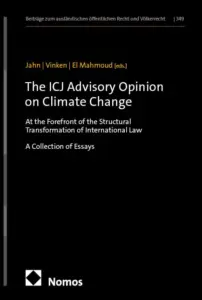
Vor Kurzem ist unser neues Law and Climate Spotlight online gegangen. Auch anderswo spielen Forschende mit neuen und offenen Formaten im internationalen Klimaschutzrecht. Ich lese zurzeit die Beiträge dieses Buchs, das aus dem fabelhaften und hervorragend kuratierten Blogsymposium des Völkerrechtsblogs zur Climate Advisory Opinion des Internationalen Gerichtshofs hervorgegangen ist. Vom Spannungsverhältnis zwischen Souveränität und Gemeinschaftsinteressen über das Wechselspiel von öffentlicher und privater Macht bis hin zur Rolle von epistemischen Ungewissheiten und postkolonialen Asymmetrien stellt das Buch das Gutachten des IGH in den größeren Kontext einer strukturellen Transformation internationaler Ordnung. In wenigen Tagen wird das Klima-Gutachten des IGH ein Jahr alt. Wer verstehen will, warum es bereits in dieser kurzen Zeit zahlreiche Facetten nationaler wie internationaler Klimapolitik geprägt hat, kommt an diesem Buch nicht vorbei.
*
Die Woche auf dem Verfassungsblog
zusammengefasst von EVA MARIA BREDLER
Wir Wissenschaftler:innen und Schreiberlinge träumen davon, ein Jahr verschwinden zu können, because we only write when it hurts (Venga, oben). Politiker:innen scheinen stattdessen mit allen Mitteln der Kunst (und des Rechts) gegen ihr Verschwinden anzukämpfen (because they only rule when it hurts?):
So kündigte Marine Le Pen ihre Kandidatur an, wenige Stunden nachdem ein Gericht ihre strafrechtliche Verurteilung bestätigt hatte. GIOVANNI CAPOCCIA (EN) zeigt, warum Le Pen eine der ältesten Demokratien Europas auf Konfrontationskurs zwischen Wahlpolitik und richterlicher Autorität geführt hat. Letzte Woche analysierte CHARLOTTE SCHMITT-LEONARDY das Urteil als kurzes „Lupfen“ von Justitias Augenbinde – der Text ist jetzt auch auf Englisch verfügbar.
Ums Lupfen der Augenbinde wurde auch das Europäische Parlament gebeten: Die Europäische Staatsanwaltschaft beantragte, die Immunität zweier Abgeordneter aufzuheben, doch das Parlament lehnte ab. NIKLAS SIMON (DE) erklärt, warum das Verhältnis zwischen den beiden Institutionen zunehmend zur Zerreißprobe wird.
Mutiger zeigte sich das Europäische Parlament dagegen bei zweifelhaften Parteien: Am 7. Juli 2026 stimmte es mit breiter Mehrheit für die Überprüfung, ob die Europe of Sovereign Nations Party aus dem Register der europäischen politischen Parteien zu streichen ist. Ausgelöst hatte die Entscheidung die Authority for European Political Parties and European Political Foundations – eine unabhängige Instanz, für die es im deutschen Parteiverbotsverfahren kein Pendant gibt. EVA ISABELL MARTIN (DE) findet, das deutsche Parteiverbotsverfahren könnte von einem ergänzenden Triggermechanismus nach europäischem Vorbild profitieren. LEONARD HOFFMANN (DE) analysiert die Behörde dahinter: eine Agentur, die nicht in das übliche Schema passt und in der Verwaltung und Politik verschwimmen.
Bekanntlich verschwimmen auch Recht und Politik in der EU regelmäßig. Am 29. Juni 2026 veröffentlichte Charlie Weimers, Berichterstatter des Verfassungsausschusses im Europäischen Parlament, einen Entwurfsbericht zum Zusammenspiel zwischen EuGH und nationalen Gerichten – und kritisiert deren fein austariertes Verhältnis. ALBERTO ALEMANNO (EN) fasst die Vorschläge zusammen und verteidigt das aktuelle Modell, während er die Verantwortung des Gerichtshofs anerkennt.
Währenddessen hat die Europäische Kommission Metas Verantwortung anerkannt: Wegen des „suchterzeugenden Designs“ von Instagram und Facebook stellte sie vorläufig Verstöße gegen den Digital Services Act fest. Angesichts der wackeligen Rechtsgrundlage liest JULIAN MORGAN (EN) die Entscheidung vor allem mit Blick auf ihre strategischen und symbolischen Dimensionen.
Bekanntlich kann KI verzerrte Ergebnisse produzieren – auch, weil sie mit nicht repräsentativen Daten trainiert wird. Aber lassen sich diese Verzerrungen durch mehr Daten beheben? Am Beispiel von Menschen mit Behinderungen erklärt PHILIPPA DUELL-PIENING (EN), warum der Ruf nach repräsentativen Daten Menschenrechtsrisiken birgt – insbesondere für die Autonomie.
Der indische Supreme Court hat sich in Prajwala mit Autonomie auf sehr viel greifbarere Weise befasst. Er entschied, dass Opfer von Menschenhandel zur sexuellen Ausbeutung ein Recht auf Rehabilitierung haben. PRANAV MITTAL (EN) sieht darin eine verpasste Chance, die Rechte von Sexarbeiter:innen zu schützen, und argumentiert, dass das Konzept decisional autonomy die Lücke schließen kann.
Eine der größten Bedrohungen unserer Autonomie ist die Klimakrise. Deshalb widmen wir dem Thema jetzt eine eigene Spotlight-Sektion. Sein jüngstes Gesicht war Europas Juni-Hitzewelle, die Tausenden das Leben kostete. Grundrechtsbasierte Klimaklagen zur Anpassung fallen in Europa jedoch bis heute durch ihre Abwesenheit auf. PARUL KUMAR und CHRIS HILSON (EN) erklären, warum das so ist – und wie sich das ändern sollte.
++++++++++Anzeige++++++++++++
International climate law has never mattered more. That’s why Verfassungsblog has built a growing body of work on climate law and governance, cited widely within and beyond academia. Our new Law and Climate Spotlightbrings this work together in one place.
If you value independent, rigorous commentary on climate law and governance, please consider supporting us.
++++++++++++++++++++++++++++
Australien ist ein Land, das für die Folgen des Klimawandels besonders anfällig ist. Zugleich ist es einer der weltweit größten Exporteure fossiler Brennstoffe, Kohle und Gas. Dieser Widerspruch prägt die australische Klimapolitik und steht im Zentrum einer neuen Beschwerde vor dem UN-Menschenrechtsausschuss, dem sogenannten „Hard Truths“-Verfahren. JACQUELINE PEEL (EN) erläutert die Beschwerde und skizziert mögliche Verfahrensausgänge.
Volkswagen musste sich in Brasilien seinen eigenen hard truths stellen: 50 Jahre nach der Versklavung von Arbeiter:innen im Amazonasgebiet wurde VW erneut verurteilt – ein Jahr, nachdem der Konzern zu einer Rekordsumme von 32 Millionen Dollar immateriellem Schadenersatz verurteilt worden war. SAULO DE MATOS und HEITOR GUIMARÃES (EN) erklären die Unterschiede zwischen den Urteilen und warum die Entscheidungen von 2026 eine neue Ära des corporate reckoning einleiten könnten.
In Ungarn bahnt sich ein constitutional reckoning an: Am Montag beschloss das ungarische Parlament eine Verfassungsänderung, die den Staatspräsidenten faktisch aus dem Amt entfernt. NÓRA CHRONOWSKI (EN) ordnet die außerordentliche Maßnahme ein – und erklärt, warum sie sie für gerechtfertigt hält.
Während Ungarn einen folgenreichen Machtwechsel erlebt, haben schottische Wähler:innen die Scottish National Party zum fünften Mal in Folge an die Macht gewählt. CATRIONA MULLAY (EN) zeigt: Im scheinbaren Stillstand passiert mehr, als auf den ersten Blick zu sehen ist.
Etwas Stillstand wünscht sich dagegen manch einer in Deutschland: Im September wird in Sachsen-Anhalt, Mecklenburg-Vorpommern und Berlin gewählt. Die Regierungsbildung dürfte kompliziert werden, und die Länder regeln diese ganz unterschiedlich: starre Frist hier, Flexibilität dort. LORENZ MÜLLER, SVEN T. SIEFKEN und PHILIPP CARTIER (DE) zeigen: Schneller ist nicht unbedingt besser.
Angesichts aktueller Umfragewerte könnten bald nicht nur Sachsen-Anhalt und Mecklenburg-Vorpommern verfassungsfeindliche Minister:innen haben, sondern auch die nächste Bundesregierung. Einen Verteidigungsminister aus den Reihen der AfD, zum Beispiel. Welche Handlungsmöglichkeiten aber haben Soldat:innen, wenn ihr oberster Dienstherr nicht mehr auf dem Boden der freiheitlich demokratischen Grundordnung steht? Derzeit hätten Soldat:innen keine legale Möglichkeit, deshalb den Dienst zu quittieren. Auch Desertieren bliebe dann strafbar, meint MUSTAFA ENES ÖZCAN (DE) – und fordert eine legale Exit-Option.
Wir ziehen uns auch bald vom Dienst zurück: Nächste Woche erscheint unser letzter Newsletter vor der Sommerpause. Aber ganz zurückziehen werden wir uns natürlich nicht, schon gar nicht für ein Jahr, wie es Rapper Venga herbeisehnt. „Es muss nämlich geschrieben werden“, wie Victor Loxen im Editorial schreibt.
*
Das war’s für diese Woche.
Ihnen alles Gute!
Ihr
Verfassungsblog-Team
Wenn Sie das wöchentliche Editorial als E-Mail zugesandt bekommen wollen, können Sie es hier bestellen.

 Daran dachte ich nicht. Ich fand mich wenig später aus ganz anderen Gründen in einer Buchhandlung wieder und ließ das Sortiment im gewohnten Zwielicht der Intentionalität an mir vorbeifliegen. Plötzlich spannte sich der Bogen doch. Ich hatte ja ein Thema, und die Buchhandlung hatte ein Buch. Es war Elena Ferrantes einzigartige Essaysammlung „An den Rändern“ (Suhrkamp). Auf ihrem erstaunlichen Coverbild ist eine kleine, offenbar weibliche Rückenfigur abgebildet, die an der roten Randmarkierung eines grobkarierten Blattes steht und in die jenseitige Dunkelheit starrt, ihr gegenüber bloß zwei weiße Punkte. Augen, vermutlich. Ich griff zu.