„Du hast keine Ahnung, wie gefährlich es in Washington ist.“ Leland Lehrman, bekannt für seinen mutigen Einsatz gegen politische Verfolgung in Deutschland, liefert im Gespräch einen ruhigen, philosophischen Einblick in die US-Politik. Ein wertvoller Dialog über die Grenzen der Macht, der zeigt: Es ist noch lange nicht zu Ende. Leland Lehrman ist in Deutschland vor [...]
Tucker Carlson hat in einer explosiven Sendung Whistleblower und Aktivisten zu Wort kommen lassen. Sie decken auf, wie in den USA ein flächendeckendes Überwachungssystem aufgebaut wird – ohne Zustimmung der Bürger, ohne demokratische Debatte. Das Versprechen von „Sicherheit“ erweist sich als leere Hülle. Tucker zeichnet ein düsteres Bild: Was George Orwell 1949 in „1984“ als [...]
Emily Kaplan, Mitbegründerin der Broken Science Initiative, bestätigt, umfangreiche Korruption in Verbindung mit wissenschaftlichen Artikeln gefunden zu haben. Die Chefredakteure der weltweit angesehensten medizinischen Fachzeitschriften – BMJ, The Lancet – räumten öffentlich ein, dass sie der eigenen publizierten Forschung nicht mehr trauen. Man könne die Studien nicht reproduzieren, wisse teilweise nicht einmal mehr, wer sie [...]
Der Angriffskrieg gegen den Iran hat sich, wie seinerzeit der Vietnamkrieg, in eine regionalen Krieg ausgeweitet, in dem die USA und Verbündete die ganze Region in Brand setzen. In der Nacht zum 19. Juli 2026 ist der Krieg in Westasien (Naher Osten) drastisch eskaliert. Während der Eskalation bombardierten einander das US-Militär und der Iran die [...]
Das Bruttosozialprodukt stammt in der westlichen Welt immer weniger aus realer Wirtschaftsleistung. Geld wird erst aus dem Nichts und dann daraus weiteres Geld geschöpft. Die Logik der Finanzmärkte erfasst gerade die reale Welt. Mit fatalen Folgen. Die Börse ist mit immer neuen Absurditäten zum Eldorado heutiger Glücksritter geworden. Dafür genügte es natürlich nicht, nur auf [...]
Ein Nest bauen, Kraftnahrung sammeln, Eier legen und ständige Kämpfe um Leben und Tod: 90 Prozent der Hornissenköniginnen sterben an Erschöpfung. Die Kolumne «Wild und wundersam».
Permakultur umfasst viele Ideen, von Wassermanagement bis Bodenaufbau. Für Bauern ist diese Art der Landwirtschaft eine riesige Umstellung. Sie braucht viel Handarbeit – richtig gemacht kann sie aber sehr produktiv sein.
Ein halbes Jahrhundert fand man kein Mittel gegen RAS, eines der wichtigsten Krebsgene. Nun ist es gelungen. In den USA wird das neue Medikament Daraxonrasib bereits eingesetzt, ähnliche Wirkstoffe sind in der Pipeline. Doch europäische Patienten müssen noch warten.
Das Startup Reflect Orbital will Tausende von Satelliten ins All bringen und damit Sonnenlicht auf die Schattenseite der Erde lenken. Dann könnten Solarpanels rund um die Uhr Strom erzeugen. Das bedroht ein ganzes Forschungsgebiet.
Schleimzysten an Gelenken sehen harmlos aus und verursachen meist auch keine Schmerzen. Sie sollten jedoch nicht ausgedrückt oder punktiert werden. Das kann schnell gefährlich werden. Die Kolumne «Hauptsache, gesund».
Von Knut Wiebe Was Leihmutterschaft bedeutet, meint man zu wissen, weiß es aber meistens nicht: es ist auch schwer, sich in die Lage einer Frau zu versetzen, die in aller Regel einen extrakorporal befruchteten Embryo (zur Definition: § 8 Embryonenschutzgesetz – ESchG) implantiert bekommt, um diesen Embryo gemäß vertraglicher Abrede bis zur Geburtsreife auszutragen und … „Kinder ohne Herkunft -Was bei Leihmutterverträgen geschieht“ weiterlesen
CDU-Bundestagsfraktionsvorsitzender Jens Spahn und sein Mann sind im Papa-Glück, liest man dieser Tage in der Presse. Dass die beiden glücklichen Papas in diesem Zusammenhang etwas getan haben, das in Deutschland einen Gesetzesbruch darstellt, scheint niemanden zu stören. Es erfolgt lediglich ein neutraler Hinweis, dass Leihmutterschaft in Deutschland verboten ist. Die wenigsten erwähnen dabei, dass die … „Gesetzgeber als Gesetzesbrecher“ weiterlesen
Uwe Steimle ist ein in der Wolle gewaschener Linker. Befreundet mit Gregor Gysi, der das heute wahrscheinlich lieber nicht mehr hören möchte. Steimles Witze wurden von den Linken geliebt und bejubelt, als sie sich gegen die bösen Imperialisten und gegen Helmut Kohl richteten. Mit dem Steimle, der seine Heimat, nicht nur die sächsische, sondern Deutschland … „Satire darf alles? Nicht im besten Deutschland aller Zeiten“ weiterlesen
Dieses Editorial ist Teil unserer Reihe „Hinter den Kulissen“, in der unsere Redakteur:innen und Autor:innen ihren kreativen Prozess in Zeiten von Künstlicher Intelligenz beschreiben. Wie kommen wir auf Ideen? Wie säen und gießen wir Ideen, wann merken wir, dass sie reif sind? Und welche Rolle spielt Künstliche Intelligenz dabei?
Der Rapper Vega schreibt in einem seiner Tracks: Ich verschwinde für ein Jahr, weil ich nur schreibe, wenn es wehtut. Das könnte man therapeutisch lesen, doch von der (Er-)Lösung des Schreibens ist nirgends die Rede. Der Stachel sitzt tiefer, er sitzt im Schreiben selbst. Schreiben heißt Scheitern; selten in eigenen Worten, meistens in denen von anderen.
Von außen kommt (fast) alles. Die Anregung für dieses Editorial genauso wie alle anderen Probleme, in die ich entweder gestellt werde oder mich selbst stelle. Über die, und unter Umständen sogar über meine eigene Kreativität in Zeiten von „KI“ zu schreiben, schien mir deshalb kaum sinnvoll. Irgendwo wird das schon stehen, oder zumindest jetzt gerade geschrieben werden. Ich habe es nur noch nicht gelesen. Darum soll es deshalb gehen: um ein lesendes, vorfindendes, „vorgefundenes Schreiben“.
Von außen auch dieser Begriff. Vor ein paar Tagen, nachdem ich vom angetragenen Thema wie häufig elektrisiert worden war, flanierte ich durch eine oberpfälzische Großstadt und fühlte mich, wie ebenso häufig, in geistig dünne Luft versetzt. Zwar hatte ich mir anlässlich der rasanten Entwicklungen der „KI“ wie jede und jeder in unserem Geschäft Gedanken gemacht, aber sie waren im Kopf geblieben und von der Außenwelt nur durch relativ abstrakte Beobachtungen bestimmt. Mit sterilen Vorstellungen dieser Art konnte ich nichts und kann man im emphatischen Sinne nicht schreiben. Echtes, gegenständliches Denken erfordert Text, fremden Text.
Daran dachte ich nicht. Ich fand mich wenig später aus ganz anderen Gründen in einer Buchhandlung wieder und ließ das Sortiment im gewohnten Zwielicht der Intentionalität an mir vorbeifliegen. Plötzlich spannte sich der Bogen doch. Ich hatte ja ein Thema, und die Buchhandlung hatte ein Buch. Es war Elena Ferrantes einzigartige Essaysammlung „An den Rändern“ (Suhrkamp). Auf ihrem erstaunlichen Coverbild ist eine kleine, offenbar weibliche Rückenfigur abgebildet, die an der roten Randmarkierung eines grobkarierten Blattes steht und in die jenseitige Dunkelheit starrt, ihr gegenüber bloß zwei weiße Punkte. Augen, vermutlich. Ich griff zu.
Dieses Papier ist das Feld, auf dem die sprachliche Schaffenskraft eines Menschen spielt. Die Finsternis dahinter ist, was nicht aus dem eigenen Text kommt, sondern von außen. Das Objekt zum Subjekt, oder, wenn man so will: die schmerzliche „Gegeninstanz“1) namens Realität. Sie tut nicht nur weh, weil wir an ihr im doppelten Sinn Anstoß nehmen, sondern auch, weil wir uns als Wissenschaftlerinnen und Wissenschaftler mit unserer Sprache an ihr den Kopf einrennen können und müssen. Beides gehört in der Form zusammen und ermöglicht erst den „Sprung“ vom privaten Gedanken auf das öffentliche Blatt: „Schreiben ist also ein Käfig, und wir betreten ihn sofort, mit unserer ersten Zeile“ – verbunden mit der Erkenntnis, „dass jede Form ein Käfig ist, nicht sehr stabil und doch notwendig, wenn man danach streben will, zu schreiben, wie noch niemand vorher geschrieben hat“ (Hervorhebung VL).
++++++++++Anzeige++++++++++++Die Universität Kassel, Fachgebiet Öffentliches Recht, IT-Recht und Umweltrecht (Prof. Dr. Gerrit Hornung), sucht zum 1.10.2026:
Wissenschaftliche:r Mitarbeiter:in (m/w/d), EG 13 TV-H, befristet (für 3 Jahre), 75% (Aufstockung auf bis zu 100% möglich)
zur Bearbeitung eines DFG-Projekts zu Rechtsfragen von Desinformation auf Online-Plattformen
Bewerbungsfrist: 11.08.2026; weitere Informationen im Ausschreibungstext.
++++++++++++++++++++++++++++
Es ist diese Widerstrebigkeit, die schon viele Namen kannte, mit der sich eine Textwissenschaft zunächst einmal abzufinden hat. Es muss gelesen und verarbeitet werden, sehr viel gelesen, sehr viel verarbeitet und eigentlich noch mehr vergessen werden, damit kein „geistreicher Dilettantismus“, der „hastig ein, zwei Texte zu plündern pflegt“ (Maria Corti), aalglatte oder notdürftig verleimte Texte fabriziert. Das ist einerseits sicher mühsam, andererseits widerspricht es den Imperativen eines Wissenschaftssystems, das die vitafüllende Produktion gefälliger, modischer, schematischer, ja: undialektischer Diskursspielereien belohnt, die sich weder an vorhandenen Formen noch an vorrangigen Objekten die Zähne ausbeißen, die überhaupt an gar nichts mehr scheitern – und erst dadurch etwas zu sagen hätten.
Die „KI“ betreibt diesen „geistreichen Dilettantismus“. Sie weiß nichts von den Anstößen und Widerständen eines „da draußen“, weil sie nicht selbst, als (leibhaftiges) Subjekt, im „da draußen“ ist. Sie ist Text. Es sind nicht die Grenzen „ihrer“ Sprache die Grenzen „ihrer“ Welt, die anders doch noch überstiegen werden könnten; das Sprachmodell hat keine Welt, die sich von ihrer mathematisierten Fragmentierungslinguistik unterscheidet. Es ist gefangen in absoluter Identität mit sich selbst – gefangen darum aber präzise nicht so, dass die sprachliche Form zu einem „Käfig“ werden könnte und also auch nicht so, dass es im Sinne Ferrantes zu bemerken in der Lage wäre, „dass kein einziges Wort wirklich unser Besitz ist.“ Unsere Worte sind der „KI“ nichts Fremdes, sie „existiert“ vielmehr erst im Vollzug ihrer schamlosen Aneignung. Nach dem roten Strich auf dem Blatt kommt für sie nichts als noch mehr Blatt.
Auch für mein Editorial gilt dagegen jenes „uralte Prinzip“, dass kein menschlicher Text ohne Prätext auskommt. Unzähliges ließe sich von anderswo und aus Ferrantes Vorträgen, gehalten knapp vor der „KI“-Epoche, ziehen. An dieser Stelle soll ein Plädoyer für die Praxis des Schreibens genügen. Es muss nämlich geschrieben werden, auch wenn der Frust über die klaustrophobische Defizienz von Mittel, Zweck und Mensch dessen Alltag beherrschen mag. Nur in einer Schreibpraxis, die von ihren Mängeln weiß und trotzdem mitten in sie hineingeht, kann ich und können wir, „während wir ackern und schwitzen, auch noch einen anderen möglichen Weg entdecken“.
Das ist die uns ganz eigene Tragik der schreibenden Kreativität, und zugleich Quell des „Vollgefühls“ der Leidenschaft, „einmal und vielleicht nie wieder“ etwas zu Papier zu bringen, das aus dem Käfig des vorgefundenen Schreibens, so notwendig er ist, für einen Moment auszubrechen vermag; vielleicht für fünfzig, vielleicht für fünf Seiten, vielleicht aber auch nur für einen Absatz. Dem Menschen, und nur ihm, kann keine Wissenschaft etwas wert sein, die er nicht mit dieser Leidenschaft tun kann.
Eurojusitalia invites early-career scholars to submit papers for its latest call, focusing on the national follow-up to rulings by the Court of Justice of the European Union and the General Court. This initiative examines the critical phase after a judgment, where EU law is implemented and its real-world impact is tested within domestic legal systems. Interested researchers must submit an abstract by September 30, 2026, for this study on European legal integration.
Der Künstler Vega hat getan, was uns oft nicht gegeben ist. Er konnte sich zurückziehen für ein Jahr, als von „da draußen“ keine Widerstände oder Anstöße sich einstellten. Wir hingegen müssen schreiben, wollen wir obenauf oder zumindest mit dabeibleiben. Dass die „KI“ mancherorts so erschütternd wirkt, hängt nur folgerichtig mit dem „stahlharten Gehäuse“ einer Wissenschaftsorganisation zusammen, der die abschnurrende Textgeneration und ihre Erfolgsmetriken lange vor den großen Sprachmodellen zur Norm geworden sind. Auch in diesem Käfig können individuelle Freiräume geschaffen werden; sie als gleich unserer sprachlichen Verfasstheit vorgegeben zu betrachten, hieße jedoch, das Soziale für ein Existential zu nehmen. Von Tragik darf hier daher keine Rede sein: Wissenschaftliche Kreativität gibt es nur in Verhältnissen zu ihren eigenen Bedingungen.2)
*
Editor’s Pick
von MAXIM BÖNNEMANN
Copyright: Nomos Verlag
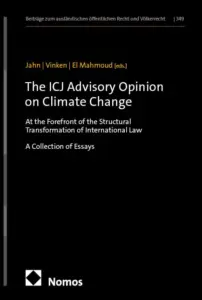
Vor Kurzem ist unser neues Law and Climate Spotlight online gegangen. Auch anderswo spielen Forschende mit neuen und offenen Formaten im internationalen Klimaschutzrecht. Ich lese zurzeit die Beiträge dieses Buchs, das aus dem fabelhaften und hervorragend kuratierten Blogsymposium des Völkerrechtsblogs zur Climate Advisory Opinion des Internationalen Gerichtshofs hervorgegangen ist. Vom Spannungsverhältnis zwischen Souveränität und Gemeinschaftsinteressen über das Wechselspiel von öffentlicher und privater Macht bis hin zur Rolle von epistemischen Ungewissheiten und postkolonialen Asymmetrien stellt das Buch das Gutachten des IGH in den größeren Kontext einer strukturellen Transformation internationaler Ordnung. In wenigen Tagen wird das Klima-Gutachten des IGH ein Jahr alt. Wer verstehen will, warum es bereits in dieser kurzen Zeit zahlreiche Facetten nationaler wie internationaler Klimapolitik geprägt hat, kommt an diesem Buch nicht vorbei.
*
Die Woche auf dem Verfassungsblog
zusammengefasst von EVA MARIA BREDLER
Wir Wissenschaftler:innen und Schreiberlinge träumen davon, ein Jahr verschwinden zu können, because we only write when it hurts (Venga, oben). Politiker:innen scheinen stattdessen mit allen Mitteln der Kunst (und des Rechts) gegen ihr Verschwinden anzukämpfen (because they only rule when it hurts?):
So kündigte Marine Le Pen ihre Kandidatur an, wenige Stunden nachdem ein Gericht ihre strafrechtliche Verurteilung bestätigt hatte. GIOVANNI CAPOCCIA (EN) zeigt, warum Le Pen eine der ältesten Demokratien Europas auf Konfrontationskurs zwischen Wahlpolitik und richterlicher Autorität geführt hat. Letzte Woche analysierte CHARLOTTE SCHMITT-LEONARDY das Urteil als kurzes „Lupfen“ von Justitias Augenbinde – der Text ist jetzt auch auf Englisch verfügbar.
Ums Lupfen der Augenbinde wurde auch das Europäische Parlament gebeten: Die Europäische Staatsanwaltschaft beantragte, die Immunität zweier Abgeordneter aufzuheben, doch das Parlament lehnte ab. NIKLAS SIMON (DE) erklärt, warum das Verhältnis zwischen den beiden Institutionen zunehmend zur Zerreißprobe wird.
Mutiger zeigte sich das Europäische Parlament dagegen bei zweifelhaften Parteien: Am 7. Juli 2026 stimmte es mit breiter Mehrheit für die Überprüfung, ob die Europe of Sovereign Nations Party aus dem Register der europäischen politischen Parteien zu streichen ist. Ausgelöst hatte die Entscheidung die Authority for European Political Parties and European Political Foundations – eine unabhängige Instanz, für die es im deutschen Parteiverbotsverfahren kein Pendant gibt. EVA ISABELL MARTIN (DE) findet, das deutsche Parteiverbotsverfahren könnte von einem ergänzenden Triggermechanismus nach europäischem Vorbild profitieren. LEONARD HOFFMANN (DE) analysiert die Behörde dahinter: eine Agentur, die nicht in das übliche Schema passt und in der Verwaltung und Politik verschwimmen.
Bekanntlich verschwimmen auch Recht und Politik in der EU regelmäßig. Am 29. Juni 2026 veröffentlichte Charlie Weimers, Berichterstatter des Verfassungsausschusses im Europäischen Parlament, einen Entwurfsbericht zum Zusammenspiel zwischen EuGH und nationalen Gerichten – und kritisiert deren fein austariertes Verhältnis. ALBERTO ALEMANNO (EN) fasst die Vorschläge zusammen und verteidigt das aktuelle Modell, während er die Verantwortung des Gerichtshofs anerkennt.
Währenddessen hat die Europäische Kommission Metas Verantwortung anerkannt: Wegen des „suchterzeugenden Designs“ von Instagram und Facebook stellte sie vorläufig Verstöße gegen den Digital Services Act fest. Angesichts der wackeligen Rechtsgrundlage liest JULIAN MORGAN (EN) die Entscheidung vor allem mit Blick auf ihre strategischen und symbolischen Dimensionen.
Bekanntlich kann KI verzerrte Ergebnisse produzieren – auch, weil sie mit nicht repräsentativen Daten trainiert wird. Aber lassen sich diese Verzerrungen durch mehr Daten beheben? Am Beispiel von Menschen mit Behinderungen erklärt PHILIPPA DUELL-PIENING (EN), warum der Ruf nach repräsentativen Daten Menschenrechtsrisiken birgt – insbesondere für die Autonomie.
Der indische Supreme Court hat sich in Prajwala mit Autonomie auf sehr viel greifbarere Weise befasst. Er entschied, dass Opfer von Menschenhandel zur sexuellen Ausbeutung ein Recht auf Rehabilitierung haben. PRANAV MITTAL (EN) sieht darin eine verpasste Chance, die Rechte von Sexarbeiter:innen zu schützen, und argumentiert, dass das Konzept decisional autonomy die Lücke schließen kann.
Eine der größten Bedrohungen unserer Autonomie ist die Klimakrise. Deshalb widmen wir dem Thema jetzt eine eigene Spotlight-Sektion. Sein jüngstes Gesicht war Europas Juni-Hitzewelle, die Tausenden das Leben kostete. Grundrechtsbasierte Klimaklagen zur Anpassung fallen in Europa jedoch bis heute durch ihre Abwesenheit auf. PARUL KUMAR und CHRIS HILSON (EN) erklären, warum das so ist – und wie sich das ändern sollte.
++++++++++Anzeige++++++++++++
International climate law has never mattered more. That’s why Verfassungsblog has built a growing body of work on climate law and governance, cited widely within and beyond academia. Our new Law and Climate Spotlightbrings this work together in one place.
If you value independent, rigorous commentary on climate law and governance, please consider supporting us.
++++++++++++++++++++++++++++
Australien ist ein Land, das für die Folgen des Klimawandels besonders anfällig ist. Zugleich ist es einer der weltweit größten Exporteure fossiler Brennstoffe, Kohle und Gas. Dieser Widerspruch prägt die australische Klimapolitik und steht im Zentrum einer neuen Beschwerde vor dem UN-Menschenrechtsausschuss, dem sogenannten „Hard Truths“-Verfahren. JACQUELINE PEEL (EN) erläutert die Beschwerde und skizziert mögliche Verfahrensausgänge.
Volkswagen musste sich in Brasilien seinen eigenen hard truths stellen: 50 Jahre nach der Versklavung von Arbeiter:innen im Amazonasgebiet wurde VW erneut verurteilt – ein Jahr, nachdem der Konzern zu einer Rekordsumme von 32 Millionen Dollar immateriellem Schadenersatz verurteilt worden war. SAULO DE MATOS und HEITOR GUIMARÃES (EN) erklären die Unterschiede zwischen den Urteilen und warum die Entscheidungen von 2026 eine neue Ära des corporate reckoning einleiten könnten.
In Ungarn bahnt sich ein constitutional reckoning an: Am Montag beschloss das ungarische Parlament eine Verfassungsänderung, die den Staatspräsidenten faktisch aus dem Amt entfernt. NÓRA CHRONOWSKI (EN) ordnet die außerordentliche Maßnahme ein – und erklärt, warum sie sie für gerechtfertigt hält.
Während Ungarn einen folgenreichen Machtwechsel erlebt, haben schottische Wähler:innen die Scottish National Party zum fünften Mal in Folge an die Macht gewählt. CATRIONA MULLAY (EN) zeigt: Im scheinbaren Stillstand passiert mehr, als auf den ersten Blick zu sehen ist.
Etwas Stillstand wünscht sich dagegen manch einer in Deutschland: Im September wird in Sachsen-Anhalt, Mecklenburg-Vorpommern und Berlin gewählt. Die Regierungsbildung dürfte kompliziert werden, und die Länder regeln diese ganz unterschiedlich: starre Frist hier, Flexibilität dort. LORENZ MÜLLER, SVEN T. SIEFKEN und PHILIPP CARTIER (DE) zeigen: Schneller ist nicht unbedingt besser.
Angesichts aktueller Umfragewerte könnten bald nicht nur Sachsen-Anhalt und Mecklenburg-Vorpommern verfassungsfeindliche Minister:innen haben, sondern auch die nächste Bundesregierung. Einen Verteidigungsminister aus den Reihen der AfD, zum Beispiel. Welche Handlungsmöglichkeiten aber haben Soldat:innen, wenn ihr oberster Dienstherr nicht mehr auf dem Boden der freiheitlich demokratischen Grundordnung steht? Derzeit hätten Soldat:innen keine legale Möglichkeit, deshalb den Dienst zu quittieren. Auch Desertieren bliebe dann strafbar, meint MUSTAFA ENES ÖZCAN (DE) – und fordert eine legale Exit-Option.
Wir ziehen uns auch bald vom Dienst zurück: Nächste Woche erscheint unser letzter Newsletter vor der Sommerpause. Aber ganz zurückziehen werden wir uns natürlich nicht, schon gar nicht für ein Jahr, wie es Rapper Venga herbeisehnt. „Es muss nämlich geschrieben werden“, wie Victor Loxen im Editorial schreibt.
*
Das war’s für diese Woche.
Ihnen alles Gute!
Ihr
Verfassungsblog-Team
Wenn Sie das wöchentliche Editorial als E-Mail zugesandt bekommen wollen, können Sie es hier bestellen.
This editorial is part of our “Behind the Scenes” series, in which our editors and authors describe their creative process in the age of artificial intelligence. How do ideas come to us? How do we sow and water them, and how do we know when they are ripe? And what role does artificial intelligence play in all of this?
In one of his tracks, the rapper Vega writes: I’m disappearing for a year, because I only write when it hurts. One could read that therapeutically, yet nothing in it speaks of writing as release, let alone redemption. The sting sits deeper: it sits in writing itself. To write is to fail – rarely in one’s own words, mostly in those of others.
Almost everything comes from outside. The idea for this editorial no less than all the other problems I am confronted with or pose myself. To write about creativity – perhaps even my own – in the age of “AI” therefore struck me as hardly worthwhile. It will already be written down somewhere, or at the very least is being written right now. I simply haven’t read it yet. And that is what this shall be about: a writing that reads – a “found writing.”
This term, too, came from outside. A few days ago, electrified, as so often, by the topic I had been handed, I was strolling through a major city of the Upper Palatinate and felt myself transported, just as often, into intellectually thin air. Like everyone in our line of business, I had of course given some thought to the breakneck development of “AI,” but those thoughts had stayed in my head, shaped by the outside world only through rather abstract observations. With sterile notions of that sort I could not – and one cannot, in the emphatic sense – write anything. Real, object-bound thinking requires text: someone else’s text.
None of this was on my mind. A little later, for entirely different reasons, I found myself in a bookshop, letting the shelves drift past me in the familiar twilight of intentionality. Then, suddenly, the arc closed. I had a topic, and the bookshop had a book. It was Elena Ferrante’s singular essay collection In the Margins (Europa Editions). Its astonishing cover shows a small Rückenfigur, apparently female, standing at the red margin line of a sheet of graph paper and staring into the darkness beyond, faced by nothing but two white dots. Eyes, presumably. I reached for it.
That paper is the field on which a human being’s linguistic creative power plays out. The darkness behind it is whatever does not come from one’s own text but from outside. The object to the subject – or, if you will: that painful “adversary instance”1) called reality. It hurts not only because it both offends and impels us but also because, as scholars, we can and must run up against it with language. In form, the two belong together, and only together do they make possible the “leap” from private thought onto the public page: “Writing is therefore a cage, and we enter it at once, with our very first line” – coupled with the insight “that every form is a cage, not very stable and yet necessary, if one wants to strive to write as no one has written before” (emphasis VL).
++++++++++Advertisement++++++++++++
Die Universität Kassel, Fachgebiet Öffentliches Recht, IT-Recht und Umweltrecht (Prof. Dr. Gerrit Hornung), sucht zum 1.10.2026:
Wissenschaftliche:r Mitarbeiter:in (m/w/d), EG 13 TV-H, befristet (für 3 Jahre), 75% (Aufstockung auf bis zu 100% möglich)
zur Bearbeitung eines DFG-Projekts zu Rechtsfragen von Desinformation auf Online-Plattformen
Bewerbungsfrist: 11.08.2026; weitere Informationen im Ausschreibungstext.
++++++++++++++++++++++++++++++++
It is this recalcitrance, one that has gone by many names, with which any textual scholarship must first come to terms. There must be reading and digesting – a great deal of reading, a great deal of digesting, and, if anything, even more forgetting – lest some “clever dilettantism,” which “tends hastily to plunder a text or two” (Maria Corti), fabricate texts that are either eerily slick or shoddily glued together. That is laborious, certainly; on the other hand, it cuts against the imperatives of an academic system that rewards the CV-padding production of schematic, fashionable, glossy – in a word: undialectical set pieces, which founder neither on given forms nor on preceding objects, which in fact no longer fail at anything at all – and only through ultimately failing would have something to say.
“AI” practises precisely this “clever dilettantism.” It knows nothing of the impulses and resistances of an “out there,” because it is not itself, as a (bodily) subject, in the “out there.” It is text. The limits of “its” language are not the limits of “its” world. Though such limits might, for a human, still be transcended, they do not apply here: the “AI” has no world distinct from its mathematized language model. It is caught in absolute identity with itself – caught, however, precisely not in such a way that linguistic form could ever become a “cage” for it, and hence not in such a way that it could notice, in Ferrante’s sense, “that not a single word is truly ours.” Our words are nothing foreign to “AI”; rather, it “exists” only in the very act of their shameless appropriation. Beyond the red line on the page there is, for it, nothing but more page.
For this editorial, by contrast, that “age-old principle” holds: no human text gets by without a pre-text. Endless material could be drawn from elsewhere and from Ferrante’s lectures, composed shortly before the epoch of “AI.” Here, a plea for the practice of writing shall suffice. For write we must, even if frustration at the claustrophobic deficiency of means, end, and man may govern its daily round. Only in a writing practice that knows its own defects and yet walks straight into their midst can we, “while we toil and sweat, also discover another possible path” (emphasis added, all my translation).
That is the tragedy – ours and ours alone – of writerly creativity, and at the same time the source of that “full feeling” of the passion of putting to paper, “once and perhaps never again,” something capable of breaking out, for a moment, of the cage of found writing, necessary though that cage is; for fifty pages perhaps, perhaps for five, perhaps only for a single paragraph. To man, and to man alone, no science can be worth anything that (s)he cannot pursue with this passion.
Eurojusitalia invites early-career scholars to submit papers for its latest call, focusing on the national follow-up to rulings by the Court of Justice of the European Union and the General Court. This initiative examines the critical phase after a judgment, where EU law is implemented and its real-world impact is tested within domestic legal systems. Interested researchers must submit an abstract by September 30, 2026, for this study on European legal integration.
The artist Vega did what is often not at our disposal. He could withdraw for a year when no resistances or impulses arrived from “out there.” We, by contrast, must write if we want to stay on top – or at least stay in the game. That “AI” should strike some quarters as so shattering follows, quite consistently, from the “iron cage” of an organization of scholarship for which the mechanical churning out of text and its yardsticks of success had become the norm long before large language models. Even inside this cage, individual spaces of freedom can be carved out; but to regard them as given to us in the same way as our linguistic constitution would be to mistake the social for an existentiale. Of tragedy, then, there can be no question: scholarly creativity exists only on the terms set by its own conditions.2)
*
Editor’s Pick
by MAXIM BÖNNEMANN
Copyright: Nomos Verlag
We recently launched our new Law and Climate Spotlight. Elsewhere, too, scholars are experimenting with new, open formats in international climate law. I’ve been working through this book, which grew out of Völkerrechtsblog’s excellent blog symposium on the International Court of Justice’s climate advisory opinion. From the tension between sovereignty and community interest, to the interplay of public and private power, to the role of epistemic uncertainty and postcolonial asymmetries, the book situates the ICJ opinion within a larger structural transformation of international order. In a few days, the climate opinion turns one. Anyone wanting to understand how it has already shaped so much of national and international climate policy in so short a time should have this book close at hand.
*
The Week on Verfassungsblog
summarised by EVA MARIA BREDLER
We researchers and scribblers dream of being able to disappear for a year because we only write when it hurts (Venga, above). Politicians, by contrast, seem to be fighting their disappearance with every means of art (and of law) at their disposal (because they only rule when it hurts?).
So, Marine Le Pen announced her candidacy hours after a court upheld her criminal conviction. GIOVANNI CAPOCCIA (ENG) shows why Le Pen has placed one of Europe’s oldest democracies on a collision course between electoral politics and judicial authority. Last week, CHARLOTTE SCHMITT-LEONARDY viewed the judgment as though Lady Justice had briefly lifted her blindfold – the piece is now also available in English.
The European Parliament was asked to lift the blindfold as well: the European Public Prosecutor’s Office requested that the Parliament waive the immunity of two MEPs, but the Parliament refused. NIKLAS SIMON (GER) explains why the relationship between the two institutions is increasingly reaching a breaking point.
By contrast, the European Parliament showed more courage concerning the questionable parties. On 7 July 2026, it voted by a broad majority to review whether the Europe of Sovereign Nations Party should be struck off the register of European political parties. The decision was triggered by the Authority for European Political Parties and European Political Foundations – an independent body without an equivalent in German party-ban proceedings. EVA ISABELL MARTIN (GER) argues that German party-ban proceedings could benefit from a supplementary trigger mechanism modelled on the European example. LEONARD HOFFMANN (GER) analyses the body behind it: an agency that doesn’t fit the usual scheme, and in which administration and politics blur.
As it is well known, law and politics blur regularly in the EU. On 29 June 2026, the European Parliament’s Constitutional Affairs rapporteur, Charlie Weimers, published a draft report on the interplay between the CJEU and national courts, criticising their delicately balanced relationship. ALBERTO ALEMANNO (ENG) summarises the proposals and defends the current model – while acknowledging that the Court also bear some responsibility to improve this relationship.
In the meantime, the European Commission acknowledged Meta’s responsibility: it preliminarily found Meta in breach of the Digital Services Act for the “addictive design” of Instagram and Facebook. In view of its arguably shaky legal basis, JULIAN MORGAN (ENG) above all highlights the decision’s strategic and symbolic dimensions.
AI, as we know, can produce biased outputs – partly because it is trained using unrepresentative data. But can more encompassing data fix that? Taking the example of people with disabilities, PHILIPPA DUELL-PIENING (ENG) explains why the push for representative data creates human rights risks – especially regarding autonomy – with little proven benefit.
The Indian Supreme Court dealt with autonomy in a much more tangible way. In Prajwala, it held that victims of sex trafficking have a right to rehabilitation. PRANAV MITTAL (ENG) considers the judgment a missed opportunity to protect the rights of sex workers. He argues that the concept of decisional autonomy could do the trick.
One of the biggest threats to our autonomy is the climate crisis. Which is why we at Verfassungsblog as of now devote a Spotlight section to it. Its most recent face was Europe’s June heatwave, which killed thousands. Yet rights-based climate litigation involving adaptation in Europe has until recently been notably absent. PARUL KUMAR and CHRIS HILSON (ENG) explain why – and how this should change.
++++++++++Advertisement++++++++++++
International climate law has never mattered more. That’s why Verfassungsblog has built a growing body of work on climate law and governance, cited widely within and beyond academia. Our new Law and Climate Spotlightbrings this work together in one place.
If you value independent, rigorous commentary on climate law and governance, please consider supporting us.
++++++++++++++++++++++++++++++++
Australia is a country highly vulnerable to the impacts of climate change. It is also one of the largest global exporters of fossil fuels, coal and gas. This contradiction plays out in Australia’s domestic climate policy and is at the heart of a new complaint to the UN Human Rights Committee, labelled the “Hard Truths” case. JACQUELINE PEEL (ENG) explains the complaint and sketches possible outcomes.
Volkswagen had to face its own hard truths in Brazil: 50 years after enslaving workers in the Amazon, VW was again convicted – a year after being ordered to pay a record $32 million in moral damages. SAULO DE MATOS and HEITOR GUIMARÃES (ENG) explain the differences between the rulings and why the 2026 rulings may open a new era of corporate reckoning.
A constitutional reckoning, meanwhile, is unfolding in Hungary: on Monday, the Hungarian Parliament adopted a new constitutional amendment effectively removing the President of the Republic from office. NÓRA CHRONOWSKI (ENG) contextualises this extraordinary measure – and explains why she considers it justified.
While Hungary is going through a consequential change in power, Scottish voters returned the Scottish National Party to power for the fifth successive time. CATRIONA MULLAY (ENG) explains that beneath the stasis, there is more taking place than meets the eye.
By contrast, many in Germany might wish for a bit of stasis themselves: in September, Saxony-Anhalt, Mecklenburg-Western Pomerania and Berlin will elect new state parliaments. Government formation is likely to be complicated, and each Land handles it differently: rigid deadline here, flexibility there. LORENZ MÜLLER, SVEN T. SIEFKEN and PHILIPP CARTIER (GER) show: faster is not necessarily better.
Given current polling numbers, anti-constitutional ministers could soon be found not only in Saxony-Anhalt and Mecklenburg-Western Pomerania, but also in the next federal government. A defence minister from the AfD ranks, for example. What options would the soldiers actually have when their commanding minister would no longer stand on the ground of the free democratic basic order? At present, soldiers would have no legal way to quit service on that basis. Since a desertion even in this case arguably remains a criminal offence, MUSTAFA ENES ÖZCAN (GER) calls for a legal exit option.
We too will soon be stepping back from duty: next week, we will publish our last newsletter before the summer break. But we won’t be stepping back entirely, of course, and certainly not for a whole year, as rapper Venga longs for. “For write we must” – as Victor Loxen writes in this week’s editorial.
*
That’s it for this week. Take care and all the best!
Yours,
the Verfassungsblog Team
If you would like to receive the weekly editorial as an e-mail, you can subscribe here.
As the Federal Constitutional Court, too, was well aware: BVerfGE 35, 79 (120 ff.), holding that the organization of university self-governance must itself accommodate the constitutionally guaranteed freedom of research and teaching.
Seit 2021 verbietet § 184l StGB den Besitz von Sexpuppen mit kindlichem Erscheinungsbild. Schon im Gesetzgebungsverfahren stieß das Verbot auf erhebliche Kritik.1) Im Mittelpunkt steht dabei weniger die kaum ernsthaft zu bestreitende moralische Ablehnung entsprechender Puppen. Vielmehr geht es um die Frage, ob der Staat diese moralische Ablehnung überhaupt mit den Mitteln des Strafrechts durchsetzen darf.
Das Bundesverfassungsgericht ließ nun die Gelegenheit ungenutzt, die verfassungsrechtlichen Grenzen einer solchen strafrechtlichen Ahndung zu markieren. Stattdessen verengt der Beschluss den absolut geschützten Kernbereich privater Lebensgestaltung – und dreht die verfassungsrechtliche Kontrollrichtung um: Nicht mehr der Gesetzgeber muss eine hinreichend rationale Grundlage für die Kriminalisierung grundrechtlich geschützten Verhaltens liefern, sondern die Wissenschaft müsste beweisen, dass die angenommene Gefahr nicht existiert.
Zur Verengung des Kernbereichs privater Lebensgestaltung
Die Nutzung einer Sexpuppe ist eine autoerotische Handlung, die vom Recht auf sexuelle Selbstbestimmung als besondere Ausprägung des allgemeinen Persönlichkeitsrechts aus Art. 2 Abs. 1 i. V. m. Art. 1 Abs. 1 GG geschützt wird. Nur in äußerst seltenen Ausnahmefällen gehört ein solches Verhalten nicht zum absolut geschützten, „abwägungsfesten“ Kernbereich privater Lebensgestaltung, nämlich dann, wenn die Handlung einen Bezug zu einer anderen Personen aufweist (Sondervotum, Rn. 11).
Die Senatsmehrheit verneint gleichwohl einen Schutz durch den abwägungsfesten Kernbereich privater Lebensgestaltung, weil die Nutzung kindlicher Sexpuppen eine Verbindung zur Persönlichkeitssphäre der Kinder habe, die potentiell durch die autoerotische Handlung gefährdet werden könnten, falls sich die Person dazu entscheidet, in Zukunft statt an der Puppe an Kindern sexuelle Handlungen auszuführen (Rn. 92 Damit weise die zunächst autoerotische Handlung einen Sozialbezug auf, der sie dem Kernbereich privater Lebensgestaltung entziehe (Rn. 11). Das BVerfG bestimmt also den Kernbereich anhand einer potenziellen Gefährlichkeit. Doch damit verliert der Kernbereich seine eigenständige Bedeutung. So kann sich auch ein Tagebucheintrag auf andere Menschen beziehen, etwa wenn er Gewalt- oder Mordfantasien enthält. Dennoch käme kaum jemand auf die Idee, ihn bereits deshalb dem absolut geschützten Bereich privater Lebensgestaltung zu entziehen.
Das BVerfG verkürzt den Kernbereich damit gerade dort, wo er seine Schutzwirkung entfalten müsste. Höchstpersönliche Handlungen, die weder gesellschaftlich missbilligt noch als gefährlich angesehen werden, bedürfen eines abwägungsfesten Schutzes kaum. Die angenommene Gefährlichkeit kann deshalb nicht selbst darüber entscheiden, ob ein Verhalten dem Kernbereich unterfällt. Anderenfalls entscheidet das Ergebnis der Abwägung bereits über deren Eröffnung.
Deutlicher formuliert dies Richter Offenloch in seinem Sondervotum. Sexualität fällt seiner Ansicht nach nur dann nicht in den absolut geschützten Kernbereich, wenn sie andere Menschen tatsächlich betrifft (Rn. 11). Masturbation bilde demgegenüber geradezu den Idealtypus kernbereichsgeschützten Verhaltens. Auch ein künftig möglicherweise übergriffiges Verhalten ändere daran nichts. Ein späteres Sexualdelikt beruhe auf einem eigenverantwortlich gefassten Willensentschluss der handelnden Person. Zwischen der autoerotischen Handlung und einer späteren Straftat liege damit eine eigenständige Entscheidung. Weshalb dies bei der Nutzung einer Sexpuppe anders zu bewerten sein sollte als bei Gewaltfantasien, bleibt offen.
Die Konsequenz reicht über § 184l StGB hinaus: Das BVerfG relativiert den Kernbereich privater Lebensgestaltung erheblich – jedenfalls für höchstpersönliche Handlungen, die potentiell einen neuen Willensentschluss für eine gefährliche Handlung hervorrufen könnten.
Von der Vertretbarkeits- zur Widerlegbarkeitsprüfung
Weniger überraschend sind die Ausführungen zur Freiheit des Gesetzgebers bei der Bestimmung strafrechtlich geschützter Rechtsgüter und der mit einer Strafnorm verfolgten Zwecke. Spätestens seit der Inzest-Entscheidung (BVerfG, Beschluss vom 26.02.2008 – 2 BvR 392/07) ist bekannt, dass ihm insoweit ein weiter Einschätzungs-, Wertungs- und Gestaltungsspielraum zukommt. Ein weiter Spielraum bedeutet aber keinen Verzicht auf verfassungsgerichtliche Kontrolle.
Zunächst prüft das Gericht das mit dem Verbot verfolgte Ziel, Kinder vor sexualisierter Gewalt zu schützen. Die These lautet, dass die Nutzung kindlicher Sexpuppen Hemmschwellen der nutzenden Personen senken und so spätere Übergriffe begünstigen könne. Doch die tatsächliche Grundlage dieser Annahme ist dünn. Es gibt kaum empirische Forschung dazu, wie sich die Nutzung kindlicher Sexpuppen auf späteres strafbares Verhalten auswirkt. Das Bundesverfassungsgericht stützt die Vertretbarkeit der gesetzgeberischen Gefahrenprognose im Wesentlichen auf die Aussagen von einzelnen Personen (Rn. 199 ff.). Die im Gesetzgebungsverfahren als Sachverständige hinzugezogene Staatsanwältin verwies auf Zusammenhänge, die allenfalls eine Korrelation, aber keine Kausalität beschreiben (Rn. 120). Wie auch das Sondervotum betont, können entsprechende Aussagen daher jedenfalls nicht ohne weitere Einordnung einen Gefahrenzusammenhang bestätigen (Rn. 23 ff.). Daneben verweist das Gericht auf Äußerungen weiterer Personen in Fernsehbeiträgen (Rn. 119). Welche Fragen gestellt wurden, in welchem Kontext die Aussagen erfolgten und auf welcher wissenschaftlichen Grundlage sie beruhen, bleibt offen. Freilich können auch außerwissenschaftliche Erkenntnisse Eingang in ein Gesetzgebungsverfahren finden. Wenn aber die Strafbarkeit eines grundrechtlich geschützten Verhaltens mit einer empirischen Gefahrenannahme begründet wird, muss die verfassungsgerichtliche Kontrolle mehr verlangen als den Verweis auf einzelne mediale Äußerungen.
Hinzu kommt, dass die Senatsmehrheit die vorhandene empirische Forschung kaum berücksichtigt und die Konsequenzen der methodischen und praktischen Schwierigkeiten der Forschung nicht würdigt. Die Kriminalisierung verschärft dieses empirische Problem sogar noch: Wer den Besitz solcher Puppen unter Strafe stellt, erschwert damit auch die Forschung über Nutzer und mögliche Auswirkungen. Das Erkenntnisdefizit, auf dessen Grundlage die Strafnorm geschaffen wurde, kann damit durch die Strafnorm selbst fortgeschrieben werden.
Das Sondervotum trifft den Kern des Problems: Um ein strafrechtliches Verbot für vertretbar zu halten, kann es nicht genügen, dass eine gesetzgeberische Gefahrenprognose nicht widerlegt werden kann (Rn. 19). Anderenfalls verkehrt sich die Kontrollrichtung. Nicht mehr der Staat muss eine hinreichend rationale Grundlage für die Kriminalisierung grundrechtlich geschützten Verhaltens vorweisen, sondern die Wissenschaft müsste beweisen, dass die angenommene Gefahr nicht besteht. Empirische Ungewissheit würde nicht mehr zur Zurückhaltung disziplinieren, sondern staatliches Strafen erst legitimieren.
Die Schaffung neuer Gesetzeszwecke
Das Gericht führt weiter aus, § 184l StGB soll einer allgemeinen Senkung von Hemmschwellen und einer schleichenden Sexualisierung von Kindern entgegenwirken (Rn. 119 f.). Woher dieser Zweck stammt, bleibt unklar, die Gesetzesmaterialien zumindest geben diesen nicht her (BT-Drs. 19/23707). Das ist schon deshalb bemerkenswert, weil das Bundesverfassungsgericht zuvor selbst darlegt, wie gesetzgeberische Zwecke zu bestimmen sind (Rn. 106). Eine entsprechende Herleitung des Ziels, eine allgemeine Enttabuisierung oder schleichende Sexualisierung von Kindern zu verhindern, erfolgt indes nicht.
Damit entzieht sich die Senatsmehrheit zugleich einer ernsthaften Vertretbarkeitskontrolle. Es fehlen Ausführungen dazu, aufgrund welcher tatsächlichen Annahmen die private Nutzung einer Sexpuppe gesellschaftliche Hemmschwellen verändern soll. Ebenso erläutert die Senatsmehrheit, wie sich diese Annahme zu der Strafbarkeit des sexuellen Missbrauchs von Kindern (§§ 176 ff. StGB) und den Kinderpornografiedelikten (§ 184b StGB) verhält. Wenn die Sorge in einer öffentlichen Normalisierung oder Kommerzialisierung kindlich sexualisierter Darstellungen liegt, wäre zudem zu erklären gewesen, weshalb nicht bereits ein Werbe-, Vertriebs- oder Verkaufsverbot ausreichend wäre. Dass das Gericht einen Gesetzeszweck entwickelt, ohne dessen empirische Grundlage näher zu überprüfen oder mildere Mittel ernsthaft zu diskutieren, hinterlässt mehr als nur methodische Zweifel.
Psychische Erkrankung und die Behinderung nach Art. 3 Abs. 3 S. 2 GG
Das Bundesverfassungsgericht lehnt es schließlich ab, Pädophilie als Behinderung i.S.v. Art. 3 Abs. 3 S. 2 GG einzuordnen, weil die Fähigkeit zur individuellen und selbstständigen Lebensführung nicht hinreichend beeinträchtigt werde (Rn. 141). Freilich ist nicht jede psychische Krankheit zugleich eine Behinderung. Die Argumentation wirft dennoch Fragen auf: Die Senatsmehrheit stellt maßgeblich darauf ab, inwieweit eine Person innerhalb der Gesellschaft funktionsfähig bleibt; Gesundheitszustand und gesellschaftliche Teilhabe treten demgegenüber in den Hintergrund (Rn. 142). Dies steht in einem Spannungsverhältnis zum teilhabeorientierten Behinderungsbegriff des § 2 Abs. 1 SGB IX und der UN-BRK, die das Bundesverfassungsgericht in anderen Entscheidungen maßgeblich berücksichtigt (siehe etwa BVerfG, Beschluss vom 16.112.2021 – 1 BvR 1541/20, Rn. 102 ff.).
Zur individuellen und selbstständigen Lebensführung gehört es auch, soziale Kontakte aufzunehmen und aufrechtzuerhalten. Für Menschen mit pädophiler Sexualpräferenz kann gerade die dauerhafte Nichterfüllbarkeit von Bedürfnissen nach partnerschaftlicher Nähe, Intimität und Sexualität erhebliche Einschränkungen begründen. Dabei geht es selbstverständlich nicht um ein Recht auf sexuelle Handlungen mit Kindern, sondern allein um die Frage, ob solche Einschränkungen persönlicher und gesellschaftlicher Teilhabe bei der Bestimmung einer Behinderung zu berücksichtigen sind. Die Senatsmehrheit scheint stattdessen primär danach zu fragen, ob die betroffene Person weiterhin in der Gesellschaft „funktioniert“, wenn sie sich auf die gesellschaftliche Wahrnehmung stützt (Rn. 141).Doch Teilhabe ist mehr als Funktionsfähigkeit (vgl. die Präambel der UN-BRK).
Fazit
§ 184l StGB verbietet ein Verhalten, das moralisch leicht zu verurteilen ist. Gerade deshalb wäre eine besonders sorgfältige verfassungsrechtliche Kontrolle notwendig gewesen. Die Begrenzungsfunktion der Grundrechte bewährt sich schließlich nicht dort, wo gesellschaftlicher Konsens besteht und staatliche Eingriffe niemanden stören – sondern dort, wo der Gesetzgeber ein Verhalten kriminalisiert, das die Mehrheit für abstoßend hält.
Ein Werbe- und Verkaufsverbot wäre weniger plakativ gewesen. Es hätte aber die öffentliche Verfügbarkeit und Normalisierung kindlicher Sexpuppen begrenzt, ohne autoerotisches Verhalten im privaten Raum unter Strafe zu stellen. Vor allem hätte es dem Grundgedanken Rechnung getragen, dass das Strafrecht ultima ratio und nicht Ausdruck moralischer Mehrheitsverhältnisse sein sollte. Die Senatsmehrheit hat sich anders entschieden. Zurück bleibt ein Beschluss, der nicht nur § 184l StGB bestätigt, sondern die Anforderungen an rationale Strafgesetzgebung an entscheidenden Stellen herabsetzt.
Vgl. dazu Grafe, in Satzger/Schluckebier/Werner, 6. Auf. 2023 § 184l Rn. 1 und die entsprechenden Stellungnahmen Kinzig, Stellungnahme, S. 17; Lederer, Stellungnahme, S. 2; Steinle, Stellungnahme, S. 7.

 Daran dachte ich nicht. Ich fand mich wenig später aus ganz anderen Gründen in einer Buchhandlung wieder und ließ das Sortiment im gewohnten Zwielicht der Intentionalität an mir vorbeifliegen. Plötzlich spannte sich der Bogen doch. Ich hatte ja ein Thema, und die Buchhandlung hatte ein Buch. Es war Elena Ferrantes einzigartige Essaysammlung „An den Rändern“ (Suhrkamp). Auf ihrem erstaunlichen Coverbild ist eine kleine, offenbar weibliche Rückenfigur abgebildet, die an der roten Randmarkierung eines grobkarierten Blattes steht und in die jenseitige Dunkelheit starrt, ihr gegenüber bloß zwei weiße Punkte. Augen, vermutlich. Ich griff zu.


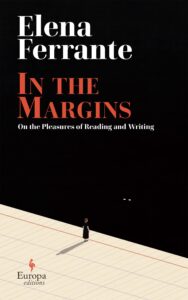 None of this was on my mind. A little later, for entirely different reasons, I found myself in a bookshop, letting the shelves drift past me in the familiar twilight of intentionality. Then, suddenly, the arc closed. I had a topic, and the bookshop had a book. It was Elena Ferrante’s singular essay collection In the Margins (Europa Editions). Its astonishing cover shows a small Rückenfigur, apparently female, standing at the red margin line of a sheet of graph paper and staring into the darkness beyond, faced by nothing but two white dots. Eyes, presumably. I reached for it.